Belgium’s first integrated PET recycling plant takes shape
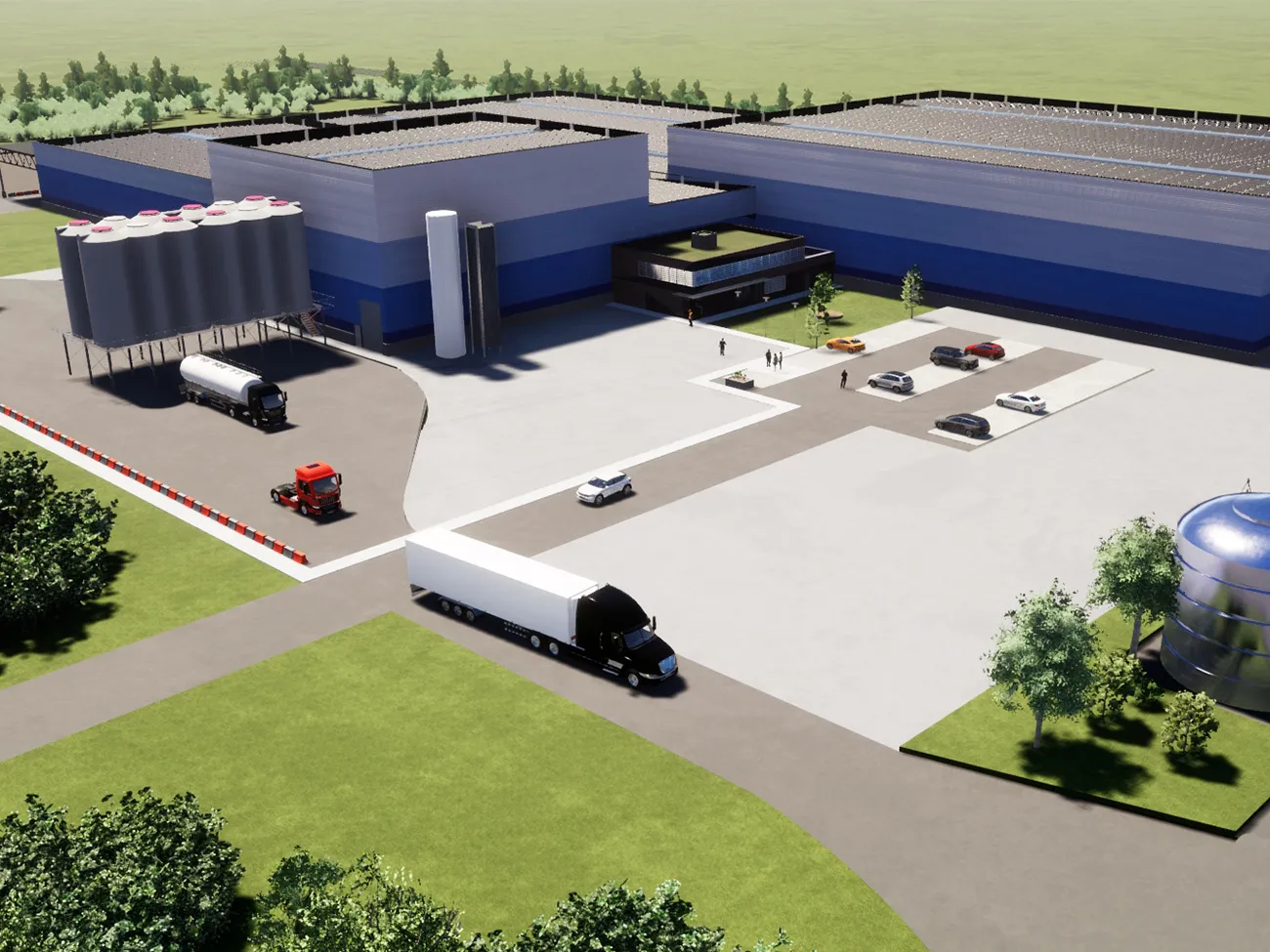
Sources Alma and Suez have joined forces to build Belgium’s first integrated PET recycling plant. Located in Couillet, near Charleroi, the plant will recycle 40,000 tonnes of PET each year and create around 40 jobs in the region. Philippe Tychon, CEO of Suez Recycling & Recovery Belgium, tells us more.
The project’s ambition
PET (polyethylene terephthalate) is the main polymer used in water bottles. In response to growing demand for environmentally friendly packaging, voiced by consumers, industry and public authorities alike, and to fulfil the Belgian industry’s commitment to achieve a 50% r-PET (recycled PET) content in PET bottles for local consumption by 2025, Fost Plus launched a tender. Sources Alma and Suez submitted a bid, bringing their combined expertise to a project to build an integrated PET recycling plant. It will be supplied with post-consumer PET bales from five Belgian sorting centres managed in partnership with Fost Plus. “In the meantime, the company name, Filao, has been published in the Belgian Official Gazette,” Philippe Tychon tells us. The name was chosen to reflect the desire for a neutral designation. “The plant will be located in Couillet, near Charleroi, on a remediated site earmarked for economic development by the inter-municipal organisation Tibi, close to the Valtris sorting centre. This location, and its connection to a recycling hub, is important for reasons of efficiency, ecology and economics. It is important to limit and shorten transport between the stakeholders in the value chain,” Philippe Tychon explains.
Huge capacity, but achievable
“For recycling to be profitable, it requires large volumes. It is certainly a challenge. But thanks to the expertise we have gained at the ‘Plastiques Atlantique’ PET recycling plant in Bayonne, which recycles around 25,000 tonnes a year, we are able to process volumes of this scale. An interesting feature of the Couillet project is that it gives us the opportunity to handle everything at a single site, from washing and preparation through to conversion into r-PET granules. 80% of the ‘bottle to bottle’ process will take place here,” Philippe Tychon explains.
“Scaling up to 40, or even 45,000 tonnes, is nothing to worry about. Fost Plus has a larger portfolio of PET waste. Of this, 33,000 tonnes are earmarked for the new plant. That means we only need to find another 7,000 tonnes on the market through private-sector flows. Fost Plus also has further volumes available. We are not concerned,” Philippe Tychon says.
Pooling resources and expertise
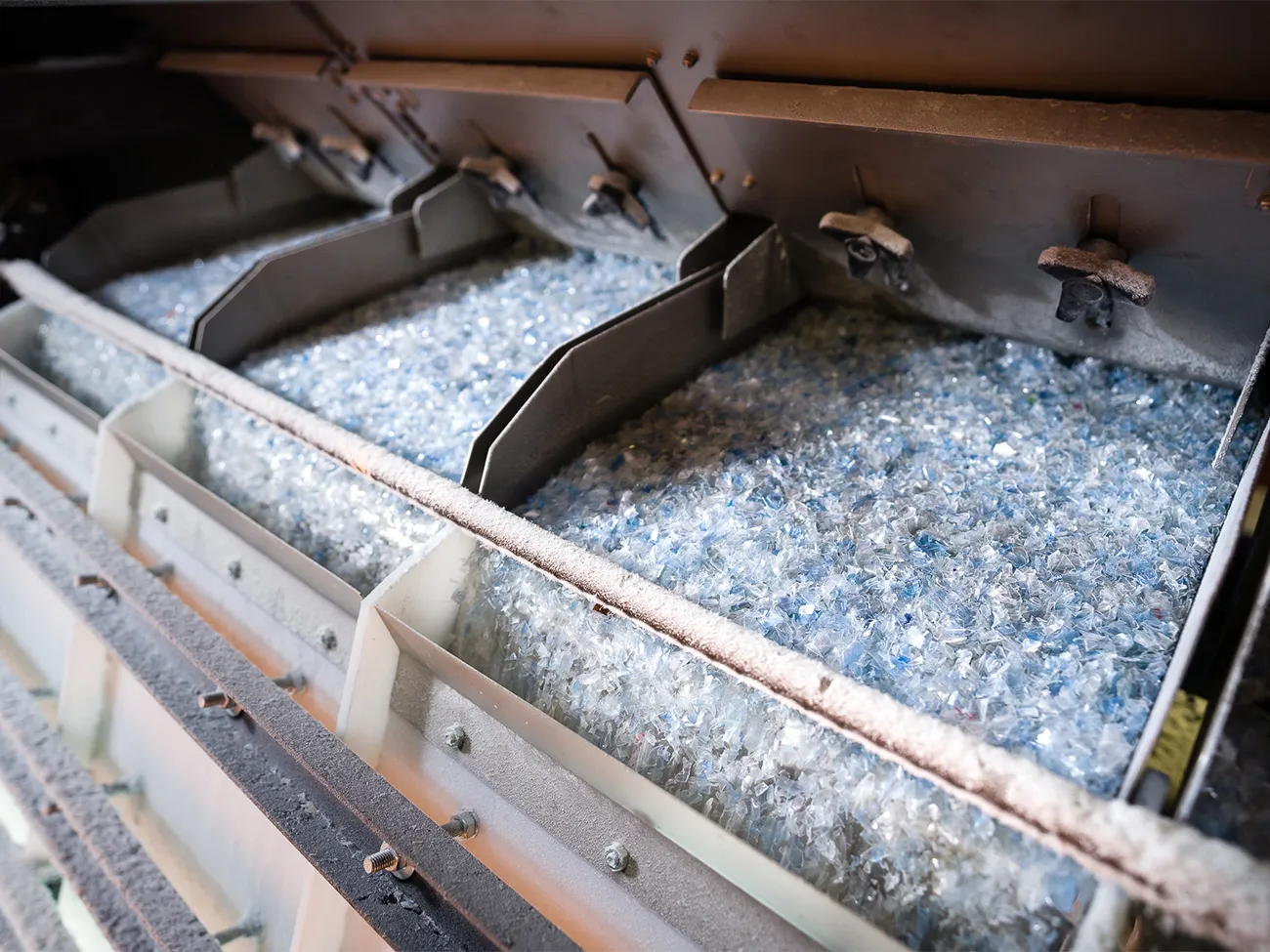
“We had already worked with Sources Alma in the past, but not through a joint venture. For the new plant, the partnership will enable us to draw on each group’s process expertise and introduce innovations, such as a dedicated machine to ‘delabel’ bottles by removing their plastic labels. At each of the ten stages of the recycling process, we can look for innovations, whether in-house or at Sources Alma, to optimise the plant’s operation. This could include laser sorting for greater accuracy, for example,” says Philippe Tychon.
What does the future hold?
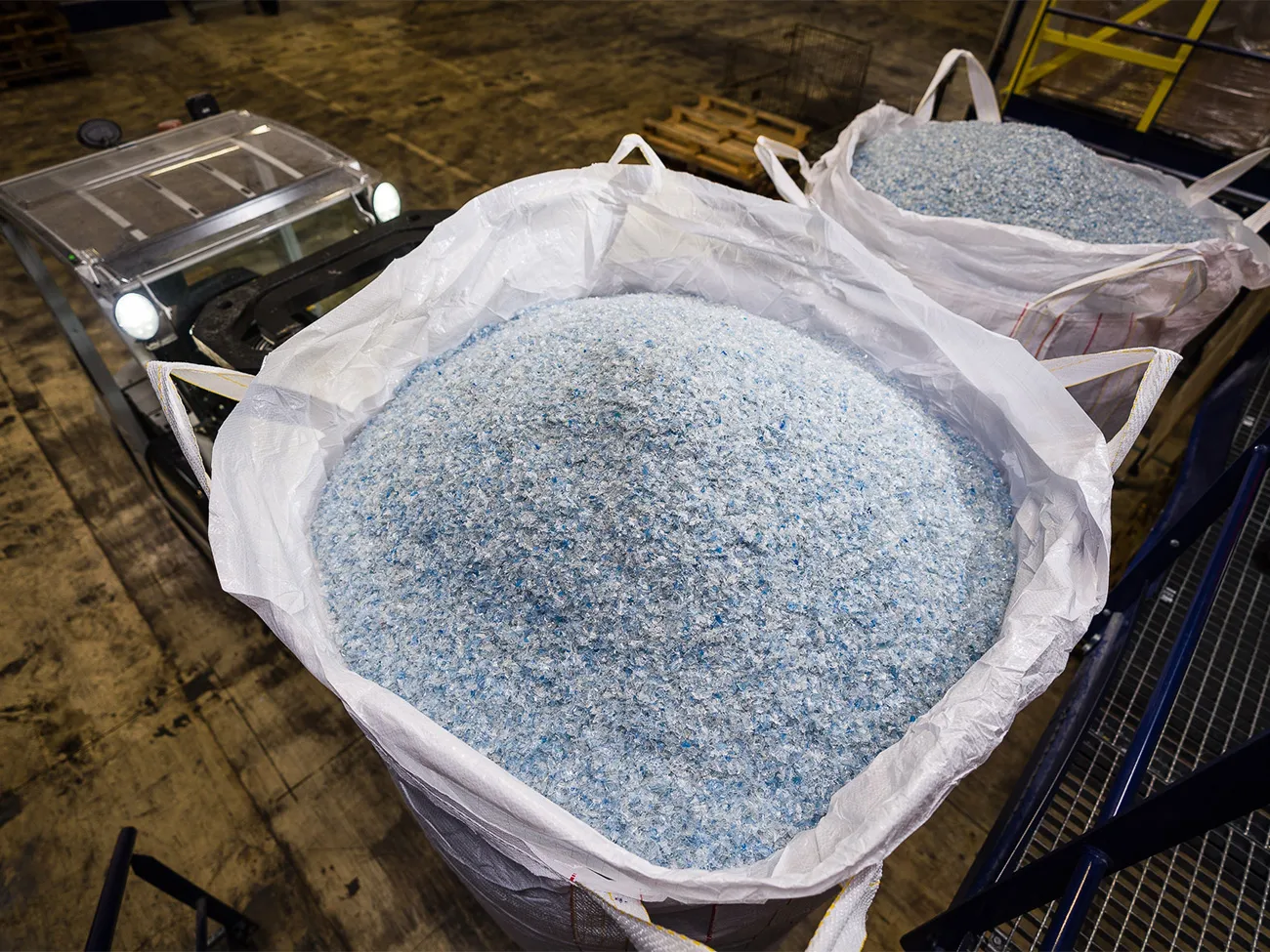
Bayonne served as a test site. Preliminary trials were also carried out there using Belgian waste to determine which components and machines to install in Couillet. It is worth noting that the material to be processed varies according to the separate collection systems in place in different countries. Moisture can also have an impact. Needless to say, it rains more in northern Europe. Even a small variation of 2 or 3% in moisture content is significant. Although the minimum r-PET content in PET bottles is set at 25% in 2025, there is no need to wait for legislation to change before improving performance. The aim is to move forward and reach 50% r-PET, or even 80% in the future. “Resource sustainability is also an important consideration. For example, pre-treatment is carried out dry, we use less process water and recover the wash water. We have installed solar panels, and we are looking with neighbouring companies at ways to increase the share of green energy,” adds Philippe Tychon. “Ultimately, all stakeholders are concerned by environmental impact and the concept of ecodesign. We need to consider which raw materials can, and cannot, be properly recycled,” Philippe Tychon concludes.
Question about this story? Ask your question
Keep following this
Get an email when a new story is published. No account needed.
- ThemeOvercoming the plastics crisis
- SubjectWaste streams