












Second biomethane injection station now operational in Quévy, near Mons
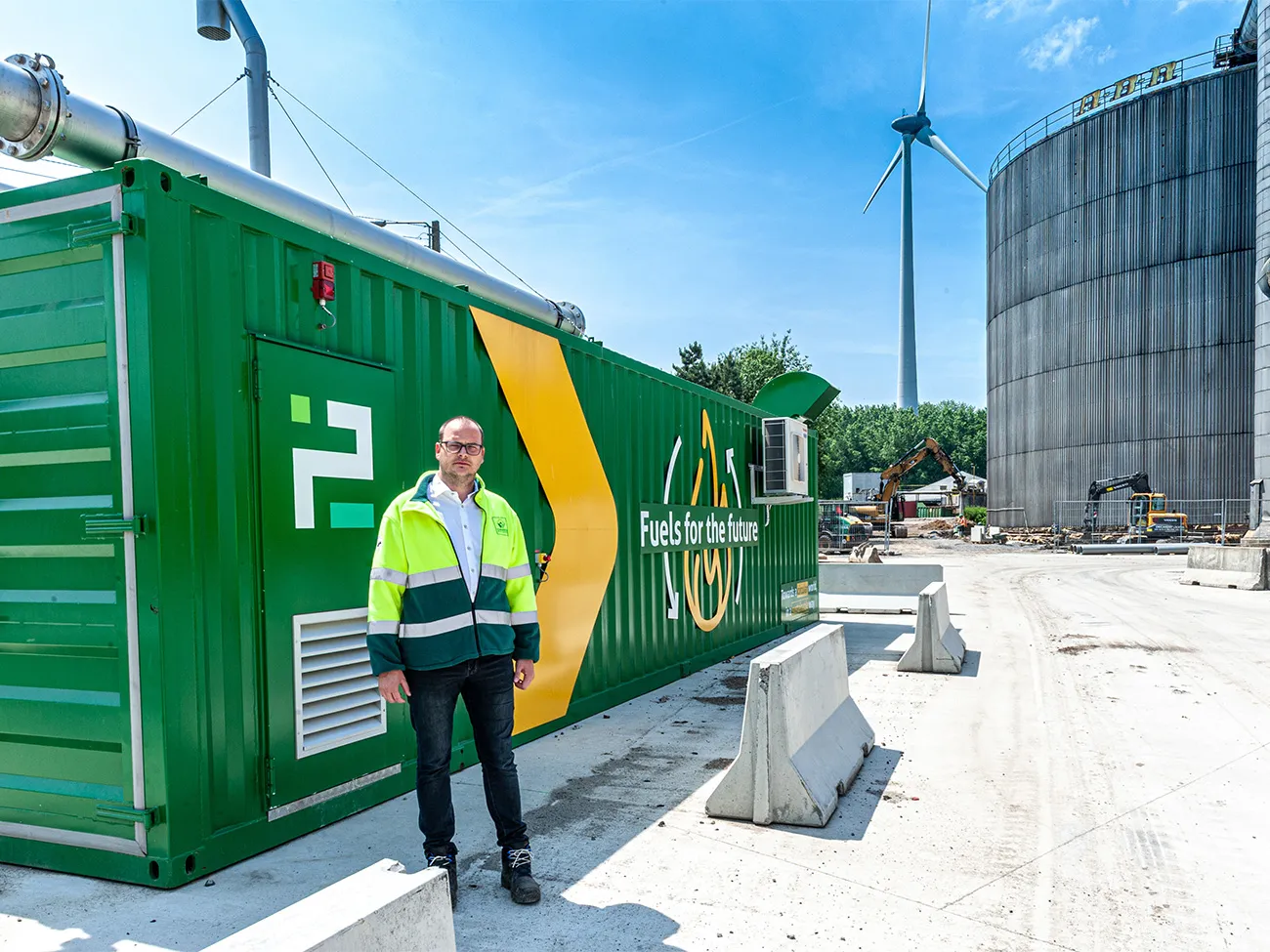
When it comes to the energy transition, it is time to step up a gear. The European Union has set itself the target of achieving carbon neutrality by 2050. With this in mind, commissioning the second biomethane injection station on the Walloon gas grid, at the Vanheede Environment Group site in Quévy, is an excellent initiative. No fewer than 2000 households will be able to heat their homes and cook using 100% locally produced renewable gas.
The Quévy site
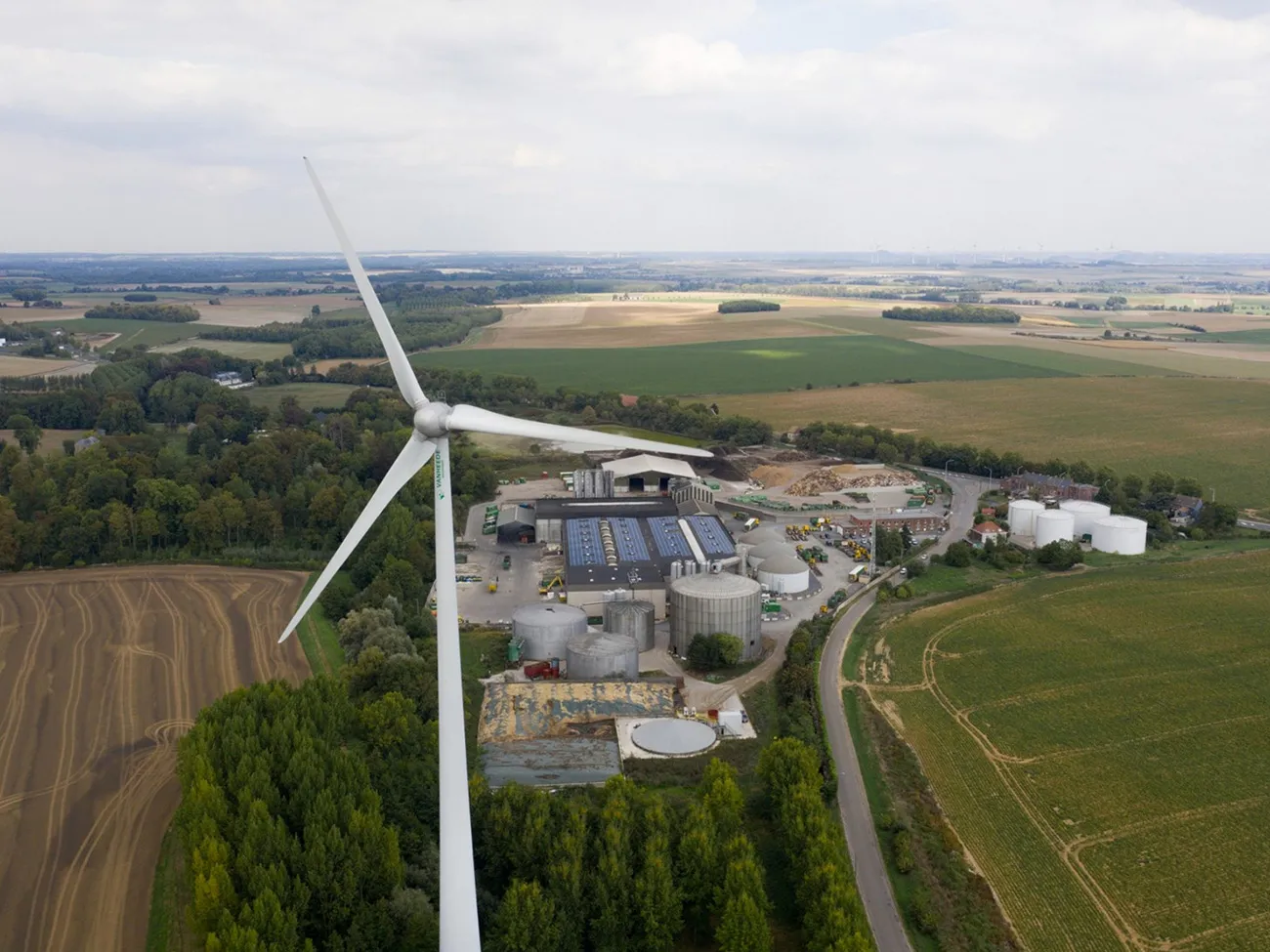
In Quévy, Vanheede Environment Group specialises in the treatment of organic waste. “This organic waste includes green waste in the form of compost, as well as organic materials from non-compliant and/or unfit-for-human-consumption food industry residues and non-recoverable agricultural materials. Our anaerobic digestion plant has been operational at the Quévy site since 2008. We switched to biomethane injection because we continued to develop our activities and had also reached the maximum capacity for electricity injection into ORES’s distribution grid. We are in a rural area, with villages nearby and the French border less than 1 km away. The local grids were reaching saturation,” Julien Pozza, director of Vanheede Biomass Solutions, tells us. “It is worth noting that the development of wind farms and the proliferation of privately owned photovoltaic panel installations have led to significant variations in electricity generation on the grid. This requires substantial capacity reserves, which limited our own injection capacity into the grids. That is not the case with a connection to the gas grid, since our anaerobic digestion plant, with its stable production and injection, offers ORES greater ‘guarantees’,” he explains.
First meetings with ORES two and a half years ago
“Through the agricultural biomethanisation federation (FEBA), we worked to establish a legal framework for injecting biomethane into the distribution grid. Once everything was in place at Walloon Region level, we launched our investment plan for the Quévy site. Initially, our injection capacity was limited to 80 to 100 cubic metres of biomethane per hour. To reach the target of 700 cubic metres, we had to overcome the challenges posed by the rural location of our site. We worked with ORES for a year to find a solution, and construction of the purification plant also took around twelve months. Ultimately, thanks to the connection of our installation, just over 2000 local households now benefit from green gas for their various needs,” concludes Mr Pozza.
ORES, facilitating the energy transition
ORES’s sustainability strategy and policy reflect a strong commitment to facilitating the energy transition. “Businesses, suppliers, network operators, local authorities, individuals… we all have a role to play in this transition,” begins Jean-Michel Brebant, coordinator of societal policy at ORES. “At our level, this means, in particular, maximising the integration of renewable energy production into our grid so that customers can use this green energy. The existing grid is there and available, and from today it can carry more than just natural gas. For example, locally produced biomethane,” he continues.
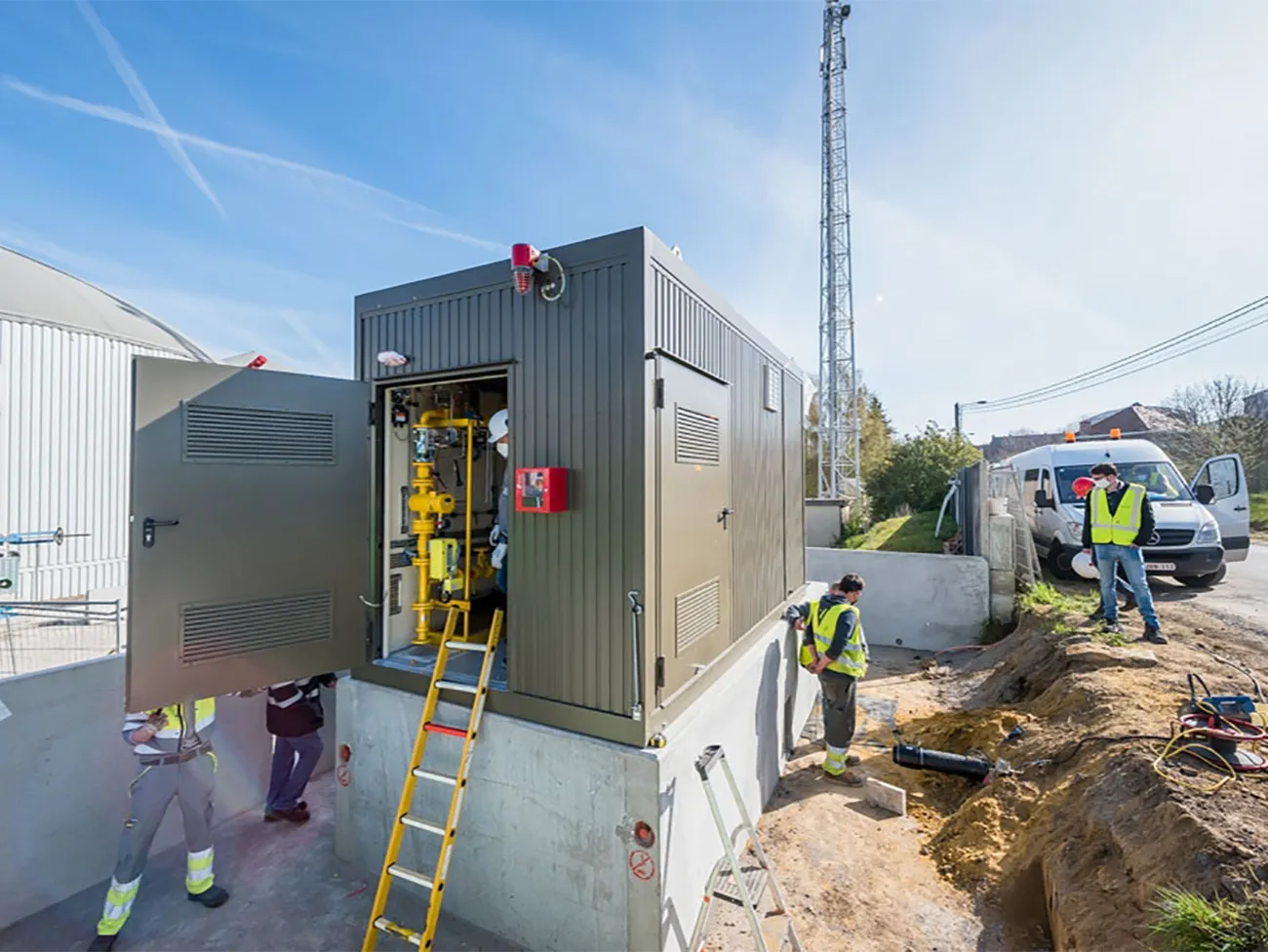
“For a little over three years, our aim has been to support businesses with their projects to inject green gas, in this case biomethane, into our distribution grid. This involves connecting these installations, carrying out any necessary reinforcement work, performing the preliminary calculations, analyses and tests, installing the injection station, and monitoring and guaranteeing the quality of the gas supplied to customers through constant monitoring. The injection station is, of course, crucial to facilitating the whole process,” explains Jean-Michel Brebant. “One of the challenges of injecting gas in rural areas is having the capacity to ‘absorb’ the quantities injected by the producing company. The gas has to be carried further, to more densely populated areas, in this case to the outskirts of Mons, where there are enough households. Sufficient pressure is also required. In our network, gas flows at medium pressure, generally at 4 bars. Its pressure is then reduced to 21 millibars, the required pressure,” Jean-Michel Brebant points out. “The network must now also be managed bidirectionally, since gas also flows ‘upstream’ from ‘downstream’. In future, it could also be used to transport other lower-carbon gases, without additional transmission costs, either economically or environmentally. There is real momentum building around recent projects to recover green energy, with considerable potential in Wallonia,” he concludes.
Question about this story? Ask your question
Keep following this
Get an email when a new story is published. No account needed.
- SubjectNews







