












Reduce waste, maximise potential: CDE helps quarries give their by-products a second life
According to washing experts, wet processing is the key to unlocking the hidden value of an operation.
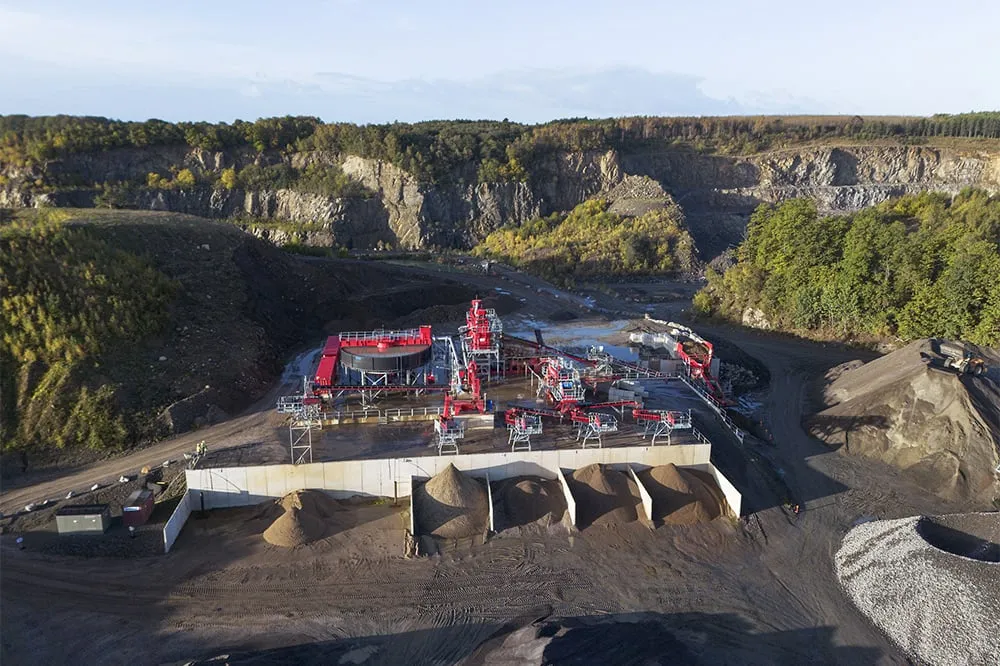
As the pace of resource extraction continues to accelerate, raw materials become increasingly depleted and barriers to obtaining permits for new sites mount, CDE, one of the leading providers of sand and aggregate washing solutions for inert waste recycling and natural materials processing, is encouraging producers to reassess their waste streams to extract greater value from their operations.
Sand and aggregates are among the resources most widely used in everyday life. They are needed to build the roads and paths we travel on, the buildings where we live and work, the microchips that power our technology, and much more besides. These resources are essential to modern life, but finite and in need of careful management.
In 2020, mining and quarrying accounted for 23.4% of total waste generated in the EU[i], while the latest Global Resources Outlook report, published by the United Nations Environment Programme, suggests that resource extraction could rise by 60% to reach 160 billion tonnes over the next three decades[ii].
Unlocking buried profits
Mining and quarrying operations generate large volumes of waste as part of the extraction process. These waste streams offer opportunities, explains Eunan Kelly, Head of Business Development for Europe at CDE.
“Overburden, stripping, excavation material and crusher fines are an integral part of the extraction process and unavoidable by-products. But they are products. Too often, these materials are classed as ‘waste’ or low-value materials, when in reality they have significant potential.”
Stripping refers to the clay-rich upper layers of soil above the bedrock, which are removed as the operation expands. Overburden includes the stones removed during primary screening by dry processing plants. Crusher fines are generated during the crushing of dry rock, producing a low-value product with a very high fines content.
Eunan continues: “With the right technology, most of these apparently low-quality by-products could be sold very profitably. This means that years’ worth of reserves and billions of tonnes of valuable materials are currently stockpiled across Europe. Processing them would ease pressure on resource extraction while generating additional revenue for operators. It is essential to start maximising available reserves and tackling the more challenging materials.”
Turning old materials into new opportunities
The traditional approach to managing by-products such as overburden, stripping and crusher fines is to stockpile them on site. This is generally a sign of the limitations of the technology used at the site when the material was extracted.
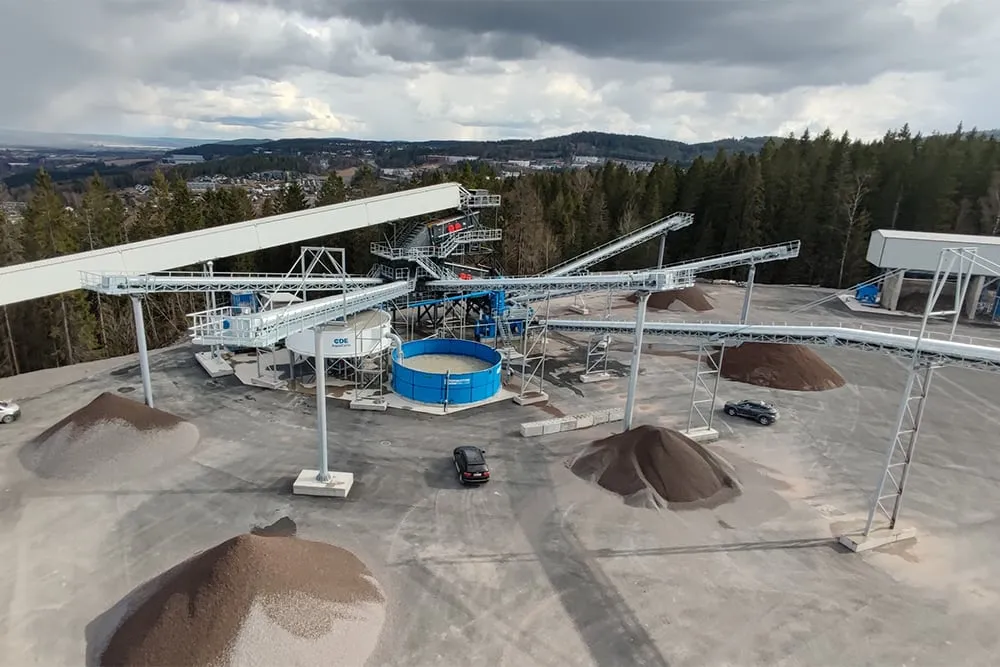
Norwegian aggregate producer Feiring Bruk had accumulated stockpiles containing hundreds of thousands of tonnes of crusher fines at its Lørenskog site. This material, which would typically have been sent to landfill, is now processed using CDE washing technology to recover high-value products, including 0-2 mm fine sand, 2-4 mm sand and 4-16 mm aggregates. CDE recently supplied a second plant to Feiring Bruk for its Bjønndalen quarry, enabling it to recover 300 t/h of similar material. This is helping the company reduce waste and conserve Norway’s natural resources while recovering clean sand and aggregates, which are in high demand in the construction sector.
CDE’s patented washing and processing technologies enable quarry operators to turn unwanted materials that would otherwise have gone to landfill into high-quality sand and aggregates that can be sold straight off the conveyor.
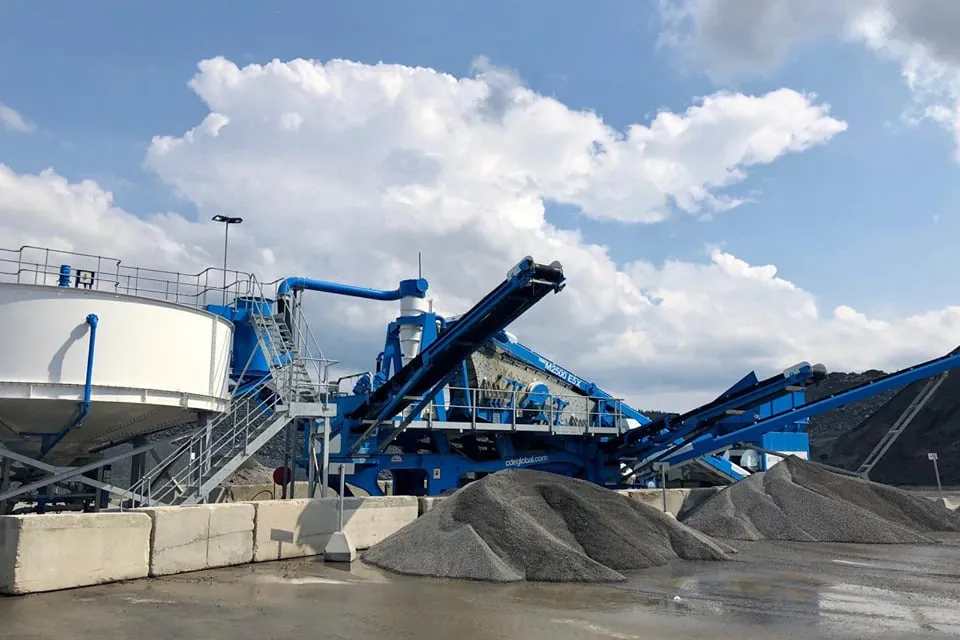
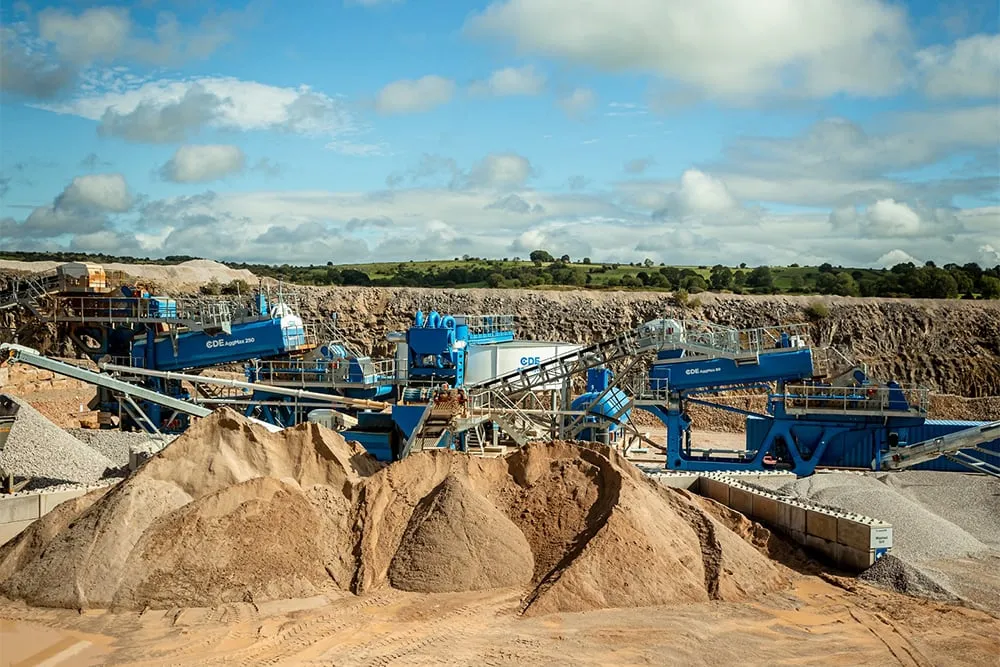
UK-based Longcliffe Quarries had always discarded its clay-rich limestone stripping material. Feasibility studies and material testing revealed a market for these products. With its state-of-the-art 220 tonnes per hour CDE wet processing plant, six different products are extracted from the clay-contaminated material, creating new revenue streams and helping to reduce CO2 emissions on site.
Conventional dry processing equipment has limitations when dealing with quarry waste, which generally has a high clay and fines content. However, advances in washing technology can overcome these challenges, producing high-quality sand and aggregates and maximising quarry yields.
“Processing this ‘waste’ can extend a quarry’s operating life, reduce stockpiling, transport and disposal costs, free up space on site and help bridge the gap between supply and demand. This is all the more important as new extraction permits are becoming increasingly difficult to obtain,” adds Eunan.
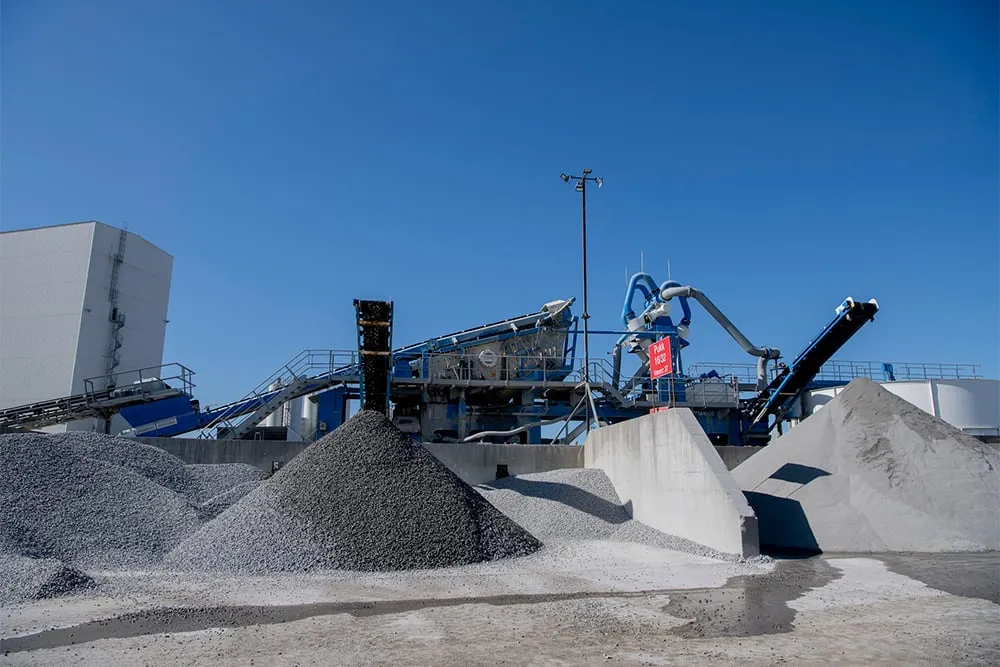
“These materials are sometimes seen as an obstacle to be overcome in order to access more sought-after materials, or as an unwanted by-product of the extraction process. We want to help materials producers unlock the full potential of their reserves. To do that, it is essential to recognise that overburden, stripping, excavation material and crusher fines have intrinsic value, as demonstrated by the success of our recent project with Swerock.”
CDE recently designed and developed a solution to help Swerock, one of Sweden’s largest suppliers of materials and services to the construction industry, process its historical stockpiles of stripping material at its Blentarp quarry. Processing up to 250 tonnes of this stripped soil per hour, the CDE washing plant enables Swerock to produce six saleable products: 0-2 mm, 2-4 mm, 4-16 mm, 16-32 mm, 32-100 mm and +100 mm.
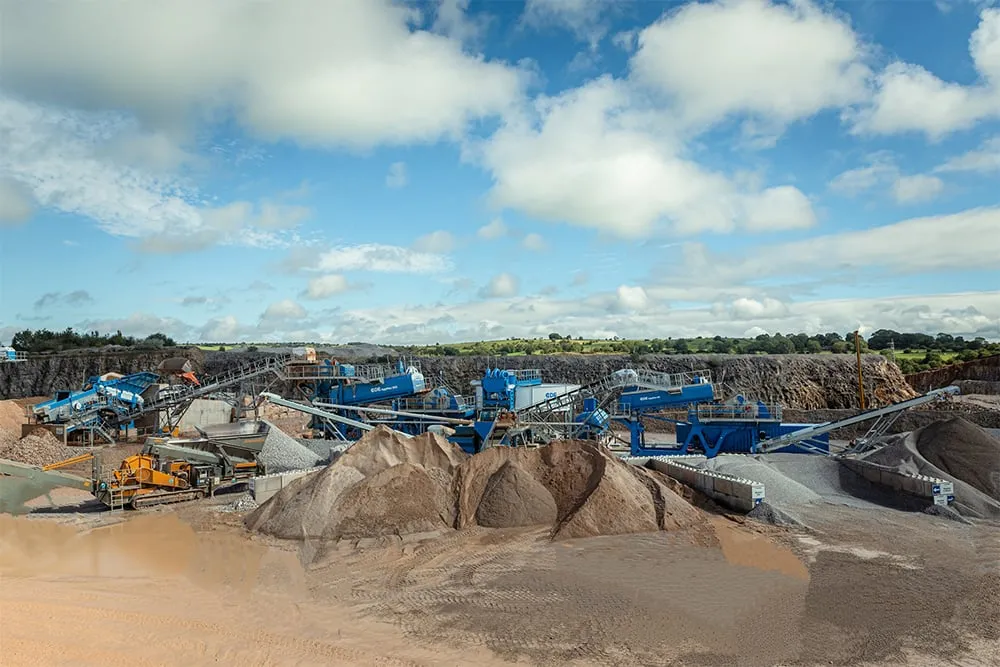
With the right processing technologies, the billions of tonnes of “quarry waste” generated around the world can be turned into products that meet specifications for high-value applications. For more information about CDE and its washing solutions designed to get the most out of natural resources, visit CDEGroup.com/dechets-de-carriere.
Een zakelijke vraag aan CDE Europe GmbH? Get in touch
Companies in this story

Keep following this
Get an email when a new story is published. No account needed.
- SubjectNews
- CompanyCDE Europe GmbH







