












Preparing the RQT with expert help
Texte Luc Ophals | Photos Profex
For guaranteed soil traceability
Profex is an engineering and consultancy firm serving contractors, SMEs and industrial companies. It was established in 2014 within the United Experts group. The name is already telling, as it refers to the firm’s around thirty PROFESSIONAL EXperts. They passionately take on the role of experienced guides in three fields: the environment (and construction), soil and energy. Their expert advice has one shared objective: to ensure the success of every project through a pragmatic approach … and an in-depth knowledge of current legislation. In this article, François Huon, project manager in the soil department, which covers soil studies and remediation, discusses the issue of soil traceability.
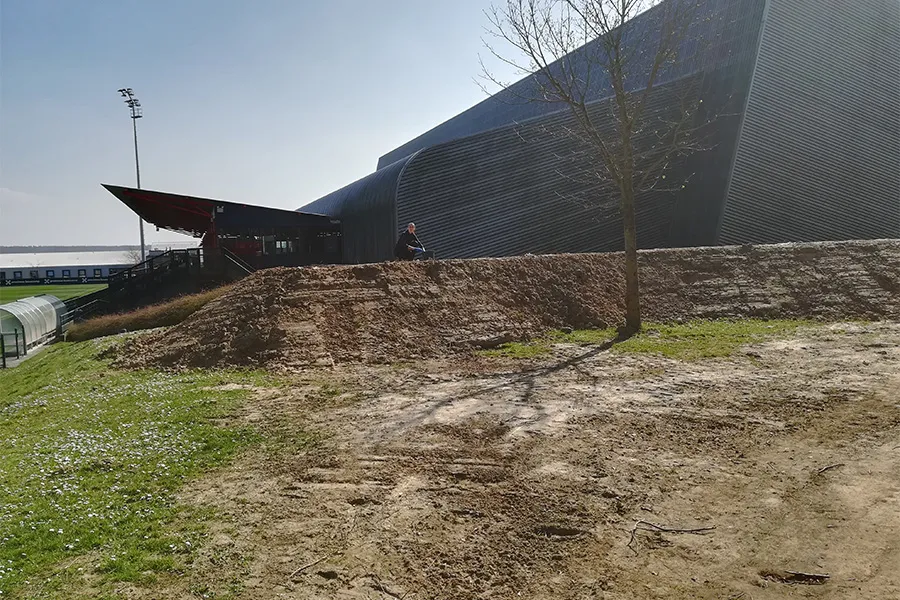
Whether through a lack of awareness or for some less commendable reason, sites sometimes receive unregulated and unauthorised deposits of excavated soil. These illegal deposits are precisely what prompted the new Walloon legislation on soil traceability, which has been in force since 1 May 2020. François Huon explains the decree: «Whenever a certain quantity of soil is moved from one site to another, a soil quality report, or RQT, must be drawn up. As a general rule, any land deemed “suspect”, meaning it may host an industrial activity that poses a risk of soil contamination, requires an RQT as soon as soil is excavated and removed from the site, to ensure full traceability. However, an RQT must also be drawn up when more than 400 cubic metres of soil are excavated from land deemed “non-suspect”, such as a large residential construction site, for example».
The process in more detail
Traceability goes beyond the soil quality report. «Once the RQT has been drawn up, the soil in question is assigned a code according to its type of use. If the client or contractor wishes to transport the soil, they must submit a soil movement notification, stating that it will be transported to an appropriate site that complies with the specified use,» explains François Huon. He adds: «Regulating soil transport means monitoring all these movements. This is managed by the non-profit organisation Walterre, which receives our RQTs, issues soil quality control certificates, receives soil movement notifications and issues transport documents».
In practice, every plot of land in Wallonia is assigned a code according to its actual use and the zoning plan. Five specific uses are recognised: natural, agricultural, residential, recreational or commercial, and industrial. Each use has a corresponding permitted concentration of contaminants, in line with the pollution standards set out in the Walloon order relating to the Soil Decree.
Profex’s involvement
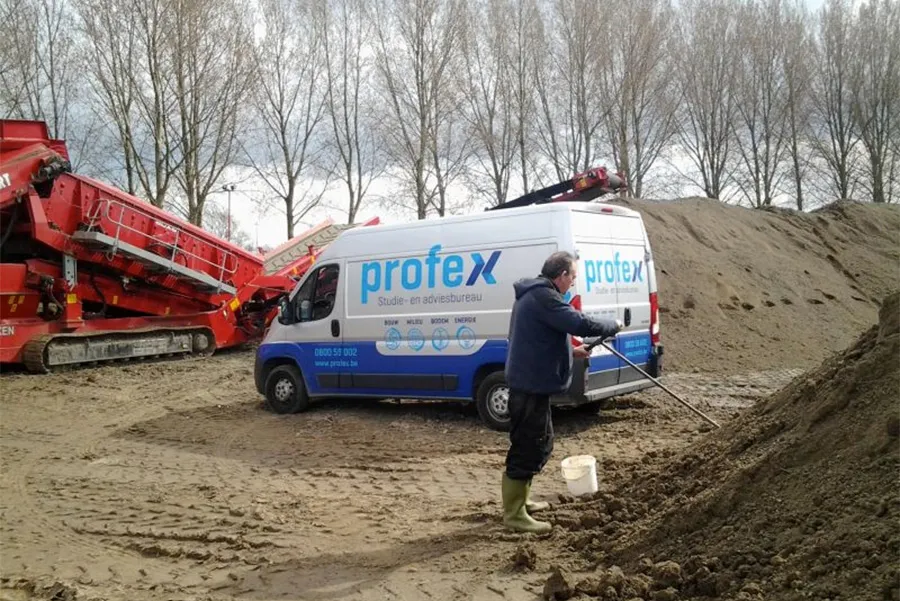
Suppose a client, such as a company, property developer or other party, contacts Profex because their project falls within the scope of the RQT requirement. François Huon explains: «The first step is to gather data on the volumes to be excavated, the excavation depth, the presence of sewers or other public utility pipes, and so on. We then draw up a drilling plan, a kind of reference guide. This is used to determine how many samples to take, based on the volume of soil, and send to the analysis laboratory. We may need to use a different drilling strategy for different soil lots, such as silty soil in the first metre excavated and sandy soil in the second. At the laboratory, the various samples undergo a series of standard analyses. The results form the basis for drawing up the soil quality report, including the recommended use. The report is sent to the non-profit organisation Walterre, which either requests additional information or issues the soil quality control certificate within 15 days of receiving the report».
Profex is mainly contacted by companies, property developers, universities renovating their campuses, private individuals planning a large construction project, and architects working on business centre developments. François Huon concludes: «We can be called in at several stages of a project, for example before work begins because the planning permission has not been granted or has only just been granted, but also after work has started because the contractor was poorly informed and only became aware of this traceability requirement during the project. It is also important to note that this traceability requirement applies to all soil brought into Wallonia, so it also covers soil moved from a Brussels construction site to a site in Wallonia. Any unauthorised movement is an offence and is, of course, punishable».
Een zakelijke vraag aan Profex? Get in touch
Companies in this story

Keep following this
Get an email when a new story is published. No account needed.
- ThemeCollecting and transporting waste
- SubjectNews
- CompanyProfex







