












How does fraud insurance protect your business?
Texte Maarten Vanhalst Image iStock

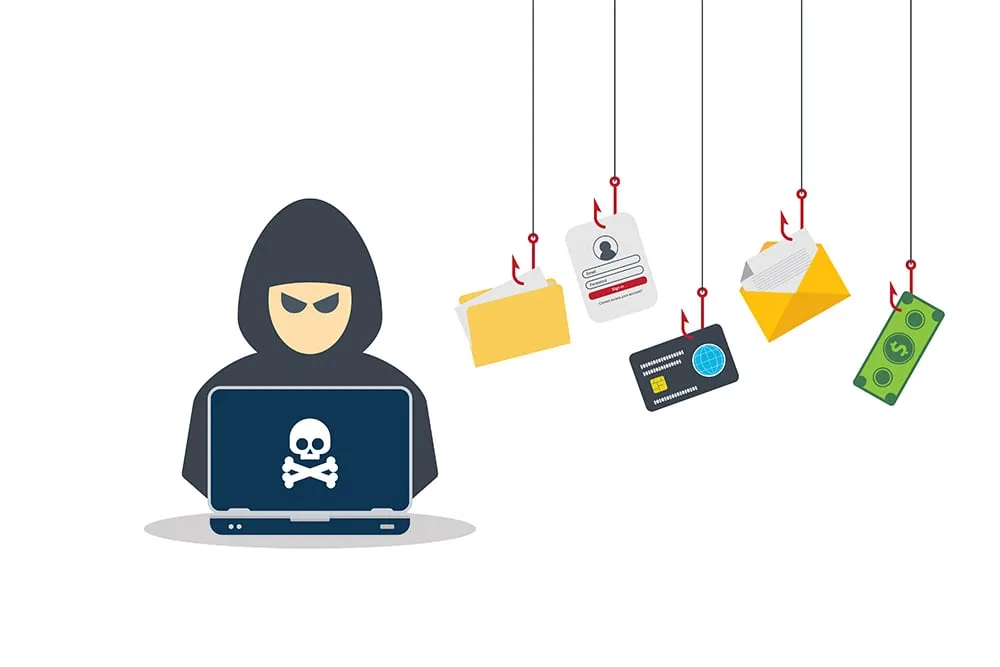
Fake invoices, CEO fraud and fraudsters posing as suppliers or customers are an increasing threat to businesses. But even employees can harm your business by making fraudulent transfers or embezzling funds. Fraud insurance provides cover in these various situations.
What types of fraud are covered by fraud insurance?
Fraud insurance typically covers two types of fraud:
- Internal fraud = fraud committed by an employee of the business
For example: identity theft, deception, document forgery, theft. - External fraud = fraud originating outside the business
For example: CEO fraud, social engineering fraud, deepfakes, deepvoice, invoice fraud, fake buyer fraud, cyber fraud
Examples of fraud
- Misappropriation of company property by an employee: An employee orders goods and fraudulently diverts them for their own personal use.
Another example: your business has a fleet of lorries, and whenever a lorry is fitted with new tyres, an employee swaps them for used tyres and takes the new ones. - Invoice fraud : You order goods, receive an invoice (digital or paper) and pay the bank account number shown on it. But a few weeks later, you receive a payment reminder, and it turns out that criminals intercepted the original invoice and sent you a fake one.
- Identity theft : Criminals send an invoice from an email address that differs by just one letter from your supplier’s actual email address, and you pay the invoice.
- CEO fraud : A criminal impersonates the CEO/CFO (email, voice) and pressures an accounts employee into making an urgent payment.
What does the insurance cover?
The policy provides compensation for the financial losses suffered by the business. In addition, the insurance also covers certain costs that are a direct consequence of the fraud, namely legal costs and reputation restoration costs.
The insurer’s contribution may be reduced by an excess specified in the policy (for example, 5,000 euros), and/or limited to a percentage of the loss (for example, 80% of the loss).
What is usually excluded?
The policy may include certain exclusions (which may be covered by another insurance policy):
- Known circumstances at the time the policy is taken out
- Fraud by directors or shareholders
- Losses relating to intellectual property rights, trade secrets, customer or prospect information
- Losses relating to taxes, duties or fines
- Fraud resulting from civil war, war or terrorism
- Losses resulting from kidnapping, ransom payments or extortion
- Loss caused by fire, water or natural disasters (may be covered by fire insurance)
- Loss resulting from a customer’s insolvency or bankruptcy (may be covered by credit insurance)
- Unintentional errors (for example, a “fat finger” payment)
What determines the premium?
Before the insurance takes effect, you must complete a questionnaire in which the insurer asks about your prevention measures. If these measures are adequate, the insurer may make an offer. The following factors determine the premium:
- Business activity (sector)
- Number of employees (FTEs)
- Turnover
- Geographical presence
- Payment controls and authorisation procedures
- IT security (antivirus software, password policy)
- Claims history
- Insurance limit
- Excess
Fraud insurance or cyber insurance?
Fraud insurance and cyber insurance have some features in common. They complement one another, but should be considered separately.
Cyber insurance is primarily designed to protect a business against a cyberattack, that is, an intrusion into its IT system. It initially provides IT support, but also covers business interruption (following a ransomware attack, for example), third-party liability and cyber theft.
It is worth noting that cyber insurance covers the theft of funds following a fraudulent transfer caused by an intrusion into the system, but not losses resulting from fake invoices. These are covered by fraud insurance.
Good to know
It is wise not to publicise the fact that your business has fraud insurance. Some insurers even prohibit any communication about it, including internally within the business.
Have questions about this topic, or would you like an exploratory discussion about the best way to insure against fraud? Contact Maarten Vanhalst, Corporate Consultant at Group Casier, [email protected], +32 56 26 13 31.
Question about this story? Ask your question
Keep following this
Get an email when a new story is published. No account needed.
- ThemePreventing recycling risks
- SubjectNews







