












Grinding wood continuously and reliably
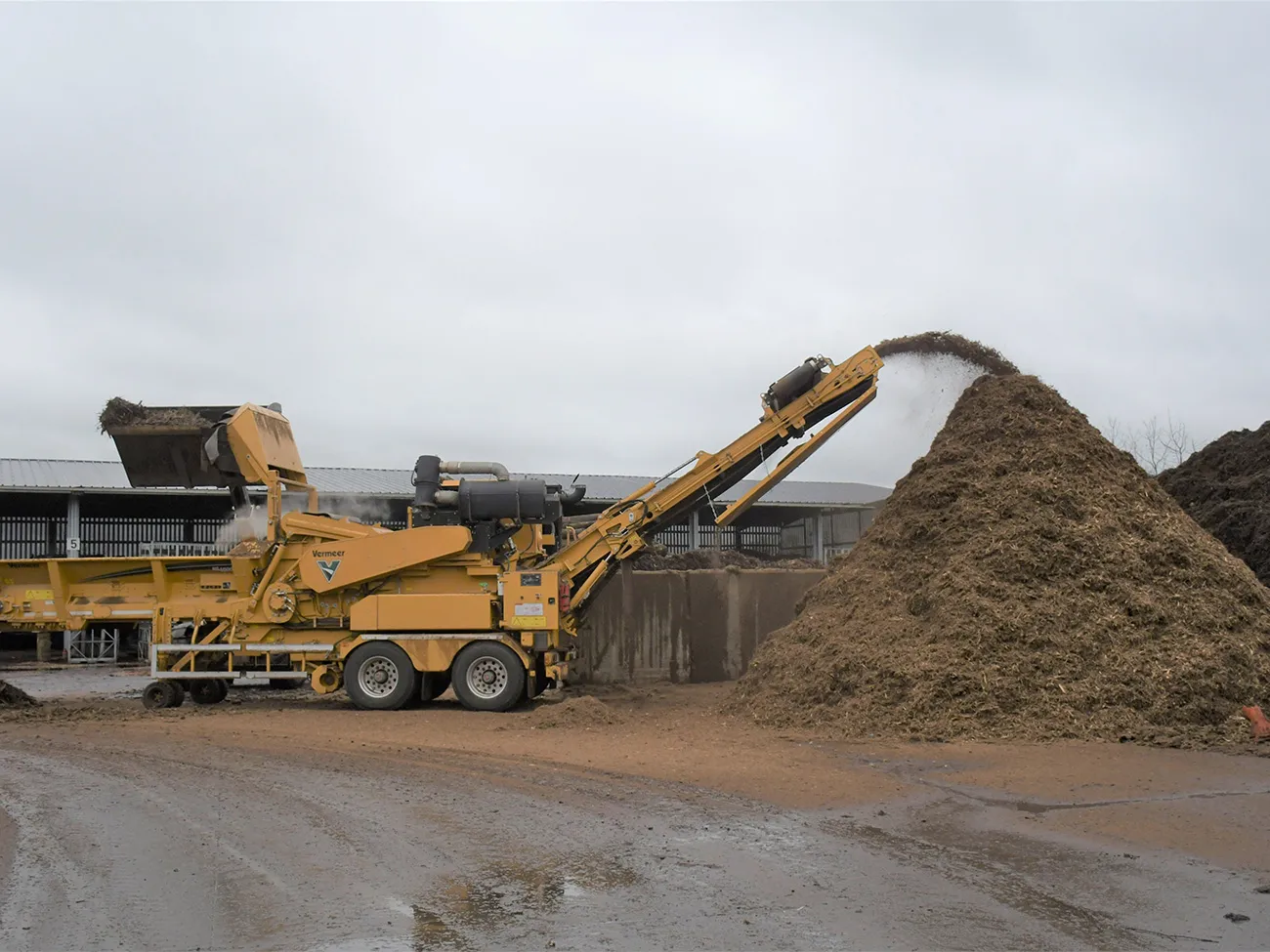
Respect is the foundation of good forest management. With the Lansink’s Ladder in mind, Groupe Mouton is always looking for the right ecological and economic destination for wood, from the largest trunk to the finest wood chips. The business started out in Lochristi, but in recent years, through Bois & Plus, it has served the Walloon and French markets with local staff. With its recent purchase of a Vermeer HG4000 grinder, Mouton is showing the way forward for the years ahead: a stronger focus on biomass and wood recycling.
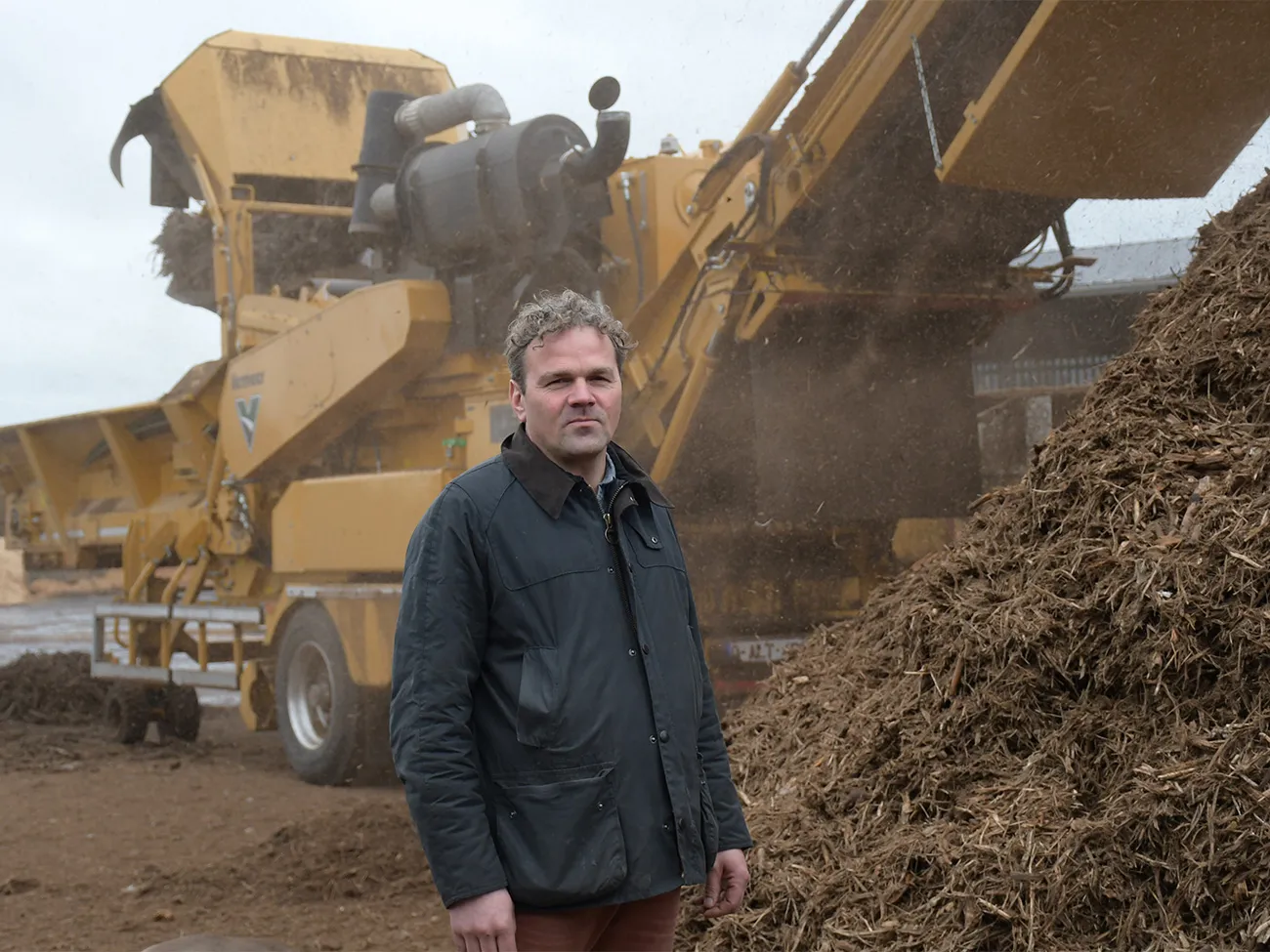
Although he inherited his entrepreneurial spirit at home, managing director Kristof Mouton discovered his passion for himself. “Trees and wood are materials that inspire me,” says Kristof Mouton. When he started working in forestry in 2000, his days were initially filled with simple tasks such as pruning. Today, Groupe Mouton can pride itself on being a specialist in comprehensive forest management. And since 2018, operations have also been run from Mouscron. Bois & Plus serves mainly the French-speaking part of the country and France, while upholding the same values Mouton instils in all his employees: respect for the material. Recovery is firmly geared towards achieving the highest possible value. “Our aim is always to treat the environment with the utmost care. Simply wielding a chainsaw is too limited an approach. If we want to build a valuable future, we must continue to recycle and recover materials,” Mouton explains, summarising the group’s philosophy.
Strong on people and machinery
“On the one hand, Bois & Plus’s strength lies in our years of experience. Mouton: “When I started out, you could count our competitors on the fingers of one hand. This enabled us, as a company, to build up a fleet of machinery step by step, so that we can now manage every stage in-house: from mapping the forest, trees and timber, and following up on permits, to carrying out all the work and recovering the materials. On the other hand, our strength also lies in the wide range of work we can handle. We have the capacity and specialist expertise, in both our people and our machinery, to complete large projects in a short time. We also have machines suited to specific jobs. Two people in our workshop are permanently responsible for maintenance and repairs, and for finding ways to adapt standard equipment even better to our needs.”
The HG4000 grinder offers mobility and flexibility
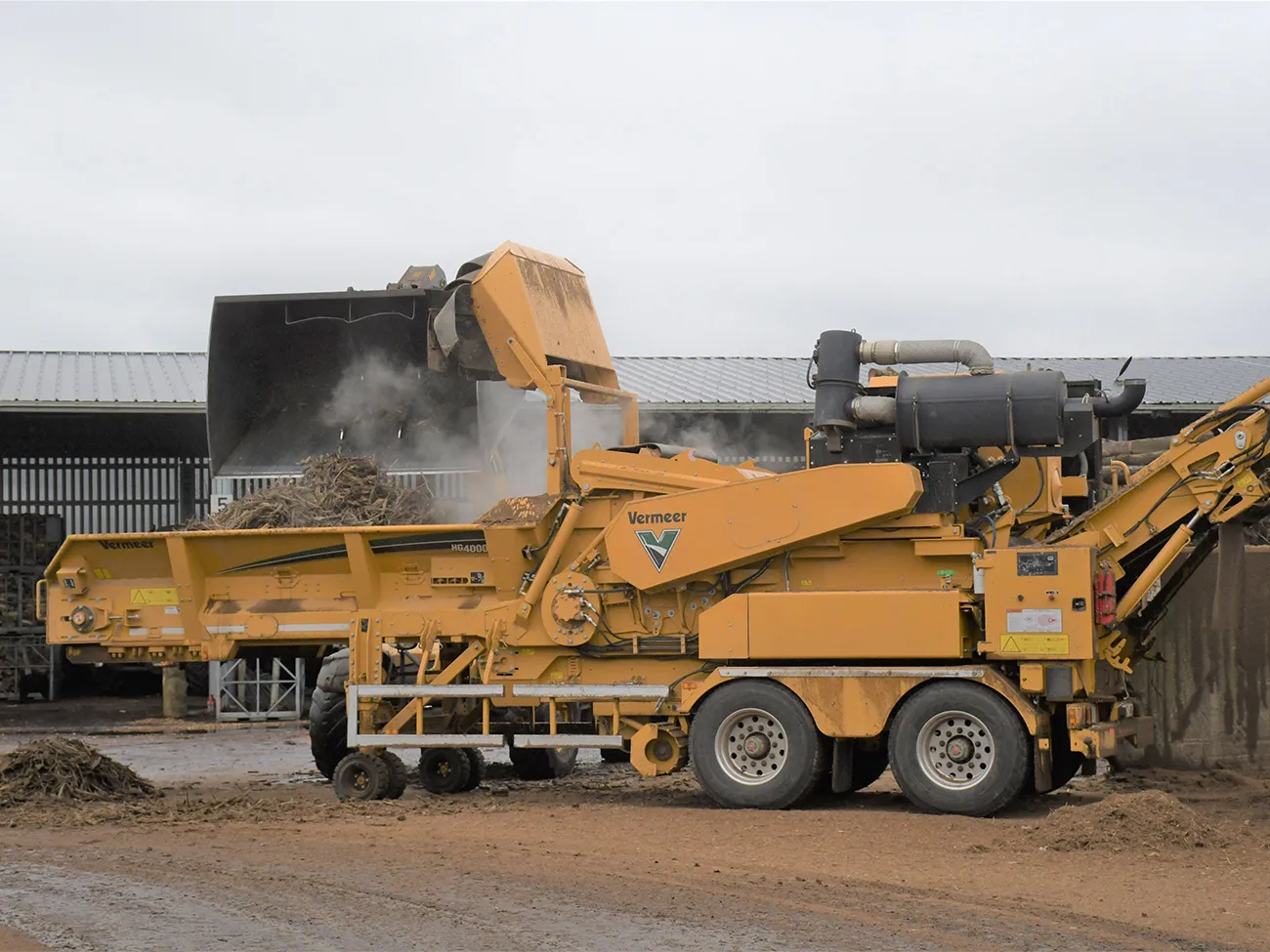
The latest addition is the Vermeer HG4000. It is an investment in the future, as Mouton wants to continue growing and sees opportunities in expanding its biomass processing and A and B wood recycling activities. “In recent years, the trend has been towards customising each wood chip. We were then forced to look across the border for machines specifically suited to a particular material stream. These were often costly investments. Today, the trend has reversed and we can turn to Vermeer machines, which are affordable, offer an excellent cost per tonne and come with a high level of confidence in the service.” Mouton spent a long time weighing up the HG4000 and HG6000. In the end, the HG4000’s mobility and flexibility proved decisive. The machine will need to travel between the different branches, and it does not even need to be driven on the road as an abnormal load.
Confidence in reliable operation
Those are not the only advantages. “The machine’s immediate availability played an important part in our decision, as we needed additional capacity quickly. In technical terms, feed capacity and access to the screening surface were crucial to our choice. We were already familiar with Vermeer’s technology from the outset, and it is clear that they have been busy in recent years. Many specifications have been improved. For example, the hammers have been reinforced and the rotor is better protected. These are important factors in ensuring continuous, reliable operation. That is also why we opted for the optional Damage Defence system. It prevents certain metal parts from entering the rotor. Many disruptive elements are removed before they can cause damage.”
Question about this story? Ask your question
Keep following this
Get an email when a new story is published. No account needed.
- SubjectNews







