












From the Green Deal to the Clean Industrial Deal
Texte Valérie Couplez | Photos essenscia, European People’s Party et iStock
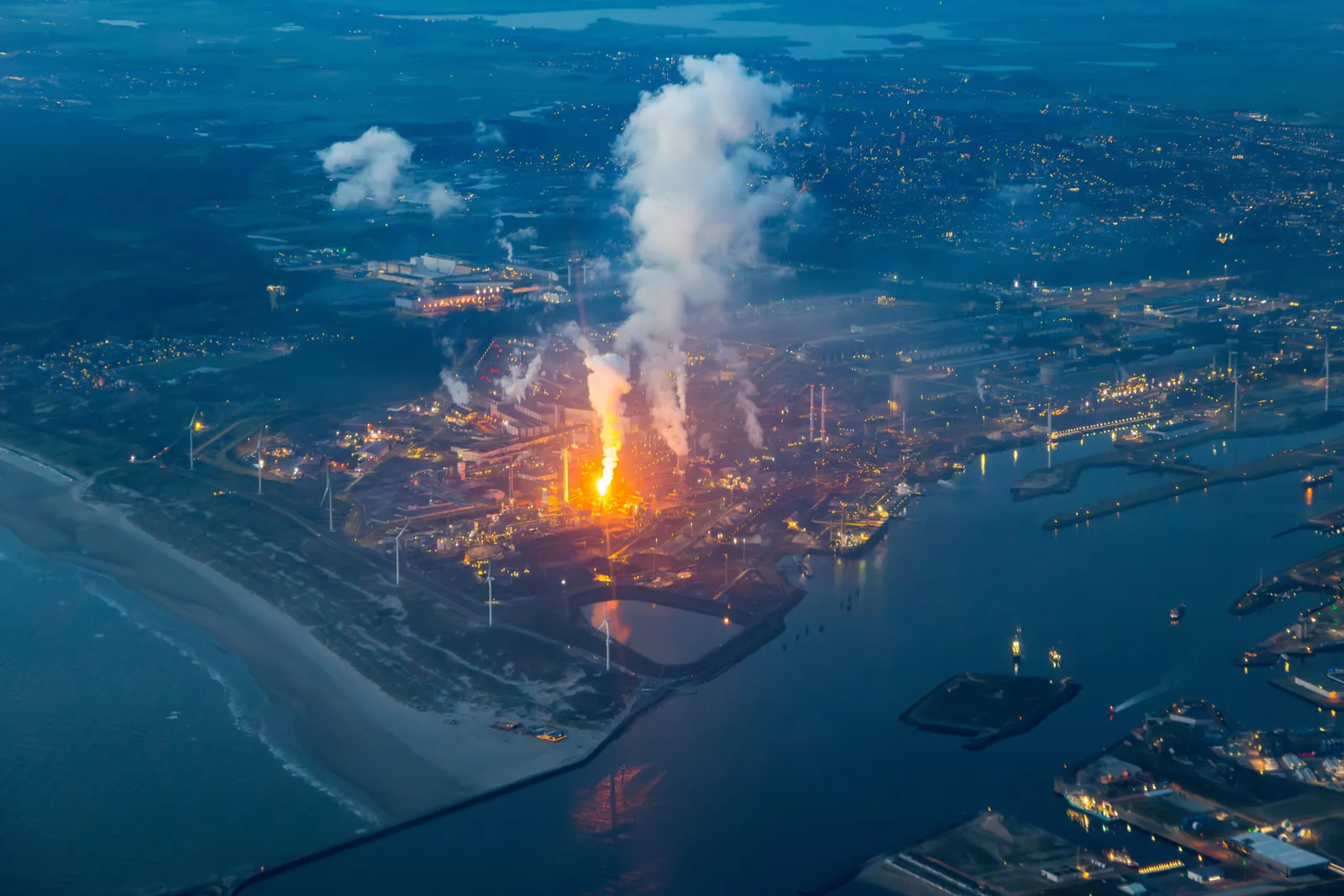
Faced with high energy costs and fierce global competition, European industries urgently need support. The Clean Industrial Deal sets out concrete measures to make decarbonisation a driver of growth for European industry. Ursula von der Leyen explained what this European pact involves in Antwerp. This comes as no surprise, as the pact is intended to address the Antwerp Declaration, in which 73 business leaders called for measures to reconcile competitiveness with the imposed environmental objectives.
The pact sets out measures to boost every stage of production, with a particular focus on energy-intensive industries and the clean technology sector. The steel, metals and chemicals sectors urgently need support to decarbonise, switch to clean energy and tackle high costs, global competition and complex regulation. Affordable energy is the cornerstone of their competitiveness. To cut energy bills for industry, businesses and households, while supporting the transition to a low-carbon economy, the Commission has adopted the Action Plan for Affordable Energy, which aims to:
- speed up the deployment of clean energy and electrification;
- complete the internal energy market by creating physical interconnections;
- use energy more efficiently and reduce dependence on imported fossil fuels.
Boosting demand for clean products
In 2026, the Commission will also review the public procurement framework to introduce preference criteria on sustainability, resilience and European origin in public contracts for strategic sectors. The Clean Industrial Deal will mobilise more than €100 billion to:
- adopt a new state aid framework under the Clean Industrial Deal to speed up the approval of state aid measures supporting the deployment of renewable energy, industrial decarbonisation and the development of sufficient manufacturing capacity in the clean technology sector;
- strengthen the Innovation Fund and propose an Industrial Decarbonisation Bank, with the aim of providing €100 billion in funding, drawing on available funds from the Innovation Fund, additional revenue from certain parts of the ETS, and the revision of InvestEU;
- launch a dedicated call under Horizon Europe to boost research and innovation in these areas;
- amend the InvestEU Regulation to increase the amount of financial guarantees that InvestEU can provide to support investment. This will help mobilise up to €50 billion for the deployment of clean technologies, clean mobility solutions and waste reduction.

Circularity and access to raw materials
Critical raw materials are fundamental to our industry. The EU must guarantee access to these materials and reduce its dependence on unreliable suppliers. Integrating circularity into our decarbonisation strategy is essential to make the most of the EU’s limited resources. The Commission will:
- establish a mechanism enabling European companies to pool their demand for critical raw materials;
- create an EU Critical Raw Materials Centre to carry out joint purchases of raw materials on behalf of interested companies, enabling economies of scale and giving them greater bargaining power to secure more favourable prices and terms;
- propose a Circular Economy Act in 2026 to accelerate the transition to a circular economy and ensure that scarce materials are used and reused efficiently, reduce our dependence on the rest of the world and create high-quality jobs. The aim is to achieve a circular material use rate of 24% by 2030.
Words followed by action
The industry response has been mixed. The pharmaceutical and chemicals industries are counting on a decisive European industrial policy that effectively addresses structural disadvantages in competitiveness. Yves Verschueren, managing director of essenscia: « We welcome the European Commission’s presentation of a Clean Industrial Deal, one year after the Antwerp Declaration. It includes numerous action points to address the industry’s structural disadvantages in competitiveness, such as reducing energy costs, easing the administrative burden and creating a more favourable climate for innovation and investment. The time has now come to turn ambition into action, so that words are followed by deeds. The situation is serious: we are losing jobs, investment and market share. But there is no denying that policymakers’ mindset has changed. The compass is pointing in the right direction again. We now need to pick up speed and stay on course to improve international competitiveness. »
Question about this story? Ask your question
Companies in this story

Keep following this
Get an email when a new story is published. No account needed.
- ThemeStrengthening recycling competitiveness
- SubjectNews
- CompanyETS







