












‘Circular Wallonia’: an expert’s view
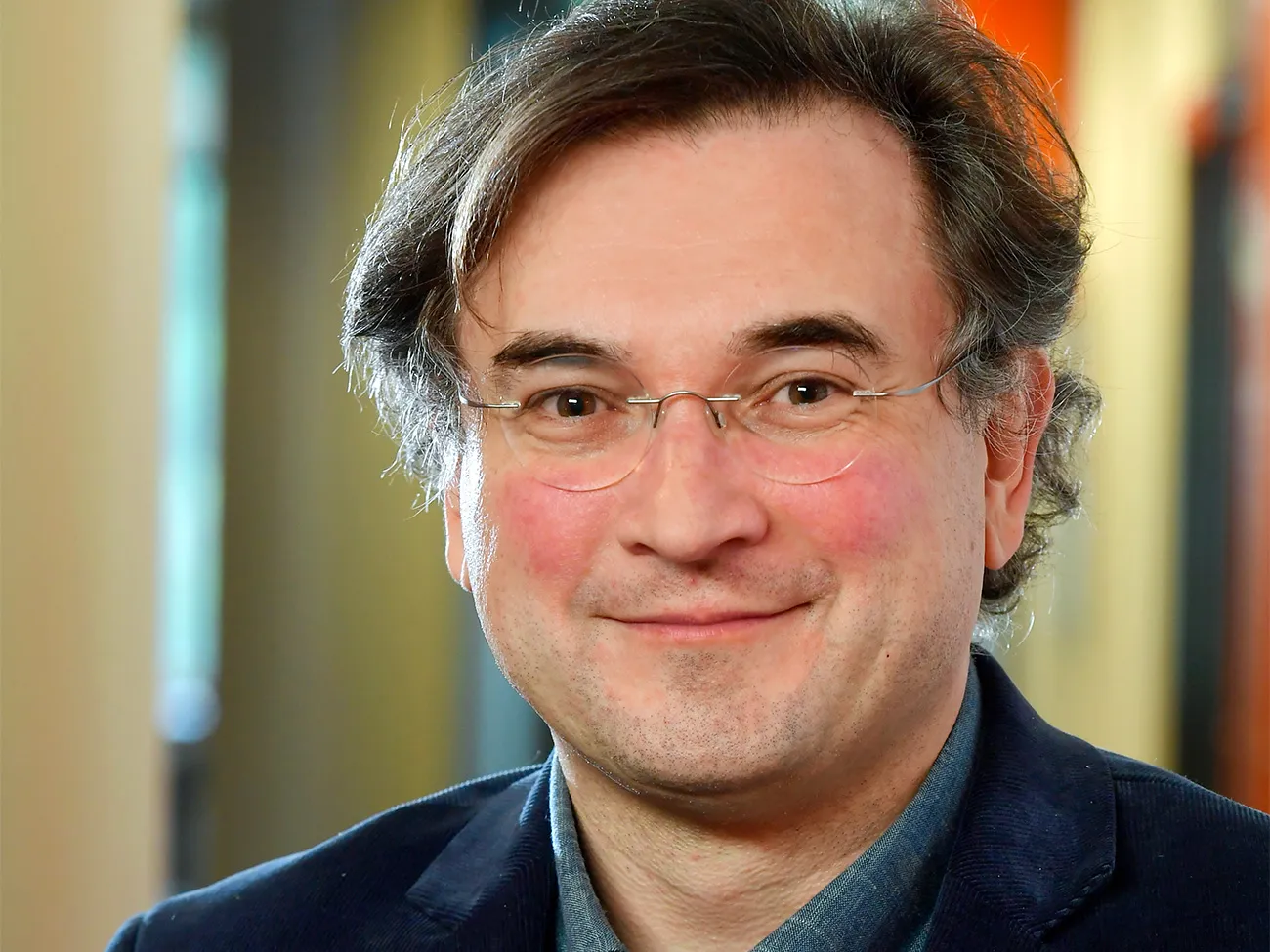
Olivier Van Volden, Expert Packaging and Circular Economy at essenscia PolyMatters, gives his view
“First of all, I would like to explain the context in which the Circular Wallonia plan was drawn up. Following the political commitment, an introductory report on the circular economy in Wallonia was adopted by parliament. This report provided the basis for defining a strategy to develop the circular economy. In a second phase, preliminary work led to the Circular Wallonia plan, adopted by the government in February 2021. Its aim is to put the strategy for developing the circular economy into action, drawing also on the work of Get’Up Wallonia.
With that context established, it is worth noting that companies in our sector, chemicals and plastics, are already active in the circular economy. The circular economy is a long-term trend. Some companies already use 100% recycled materials in their manufacturing processes, but do not publicise this. The major challenge seems to be connecting all the players. But this is a complex issue, and complex issues take time. Everyone needs to understand one another. We tend to think that companies do not talk to each other. Yet, in the industrial system, they do engage in dialogue. In the plastics sector, this is arguably a little more complicated. There is such a wide variety of plastic materials and uses that the question is not who talks to whom, but what we should focus on. Within Circular Wallonia, a working group has come together to take on the challenge of implementing the plan. It comprises Denuo, CerTech, Greenwin as coordinator, the Plastiwin cluster, which brings together plastics-processing businesses in Wallonia, the SPW Déchets Department of Soil and Waste, and essenscia PolyMatters.
But let us return to the plan. Take measure 52: “Identify and raise awareness of ecosystems and catchment areas, from upstream to downstream in the value chain”.
In analysing the ecosystem, the approach taken was not to focus on what everyone else does, for example packaging, but instead to consider what should be done in sectors of society such as healthcare and construction. This means bringing in players with more specific expertise in these sectors and collecting information and data. Beyond understanding the ecosystems, profitability remains the fundamental obstacle to the circular economy. There is no getting around it. It may be possible to recycle a particular item, but that means setting up a company or building a production unit and processing a profitable quantity, not 50 kg a year. The socioeconomic conditions for implementation will determine whether something gets off the ground. Yes, but… you might say that Belgium has large quantities of plastic waste. That is true. But industrial processing is measured in tonnes, not volume. That changes everything. Plastic has the advantage of being lightweight and coming in many different forms. In fact, a large pile of plastic is relatively light. There are many different plastic applications, each meeting different technical and societal requirements. So, although we have the quantities, we need to identify where circularity makes sense.
Mapping waste and product flows is therefore essential. It will show that Walloon companies are active in export markets, to varying degrees. In other words, waste from the use of their products may be found in another country, while waste here may have come from production elsewhere. This has a significant economic impact. That is why we need to know what we have, what leaves the region and where it goes.
Another major difficulty, and indeed a paradox, is that Europe champions the free movement of goods, yet it is extremely difficult to cross borders with waste, including regional borders. This is a major obstacle. The relevance of this issue needs to be considered at European level.
Plastic products can also meet needs where other materials are no longer suitable, or are not suitable at all. For example, copper heating pipes are being replaced by cheaper polymers. This frees up copper for other applications. Plastics are ubiquitous in construction. Does it make economic and social sense to remove plastics from construction? This is a question addressed in the Circular Wallonia plan. We need to distinguish between what is holding things back, what is working and what is not.
When it comes to involvement, innovation and awareness-raising, SMEs and micro-enterprises have different concerns from large companies, because their first priority is to keep their businesses running. Another problem that Circular Wallonia can address is misinformation. The aim is to share the most accurate information possible and help the general public learn more. We must avoid oversimplification and base our thinking on scientific evidence.
To conclude, and offer food for thought, I would say that Circular Wallonia is paradoxically a meeting place for shaping Walloon social and societal priorities, as well as a cornerstone of sustainable development. This shows just how challenging the task is.”
Question about this story? Ask your question
Keep following this
Get an email when a new story is published. No account needed.
- ThemeOvercoming the plastics crisis
- SubjectNews







