












‘Circular Wallonia’: an expert’s view …
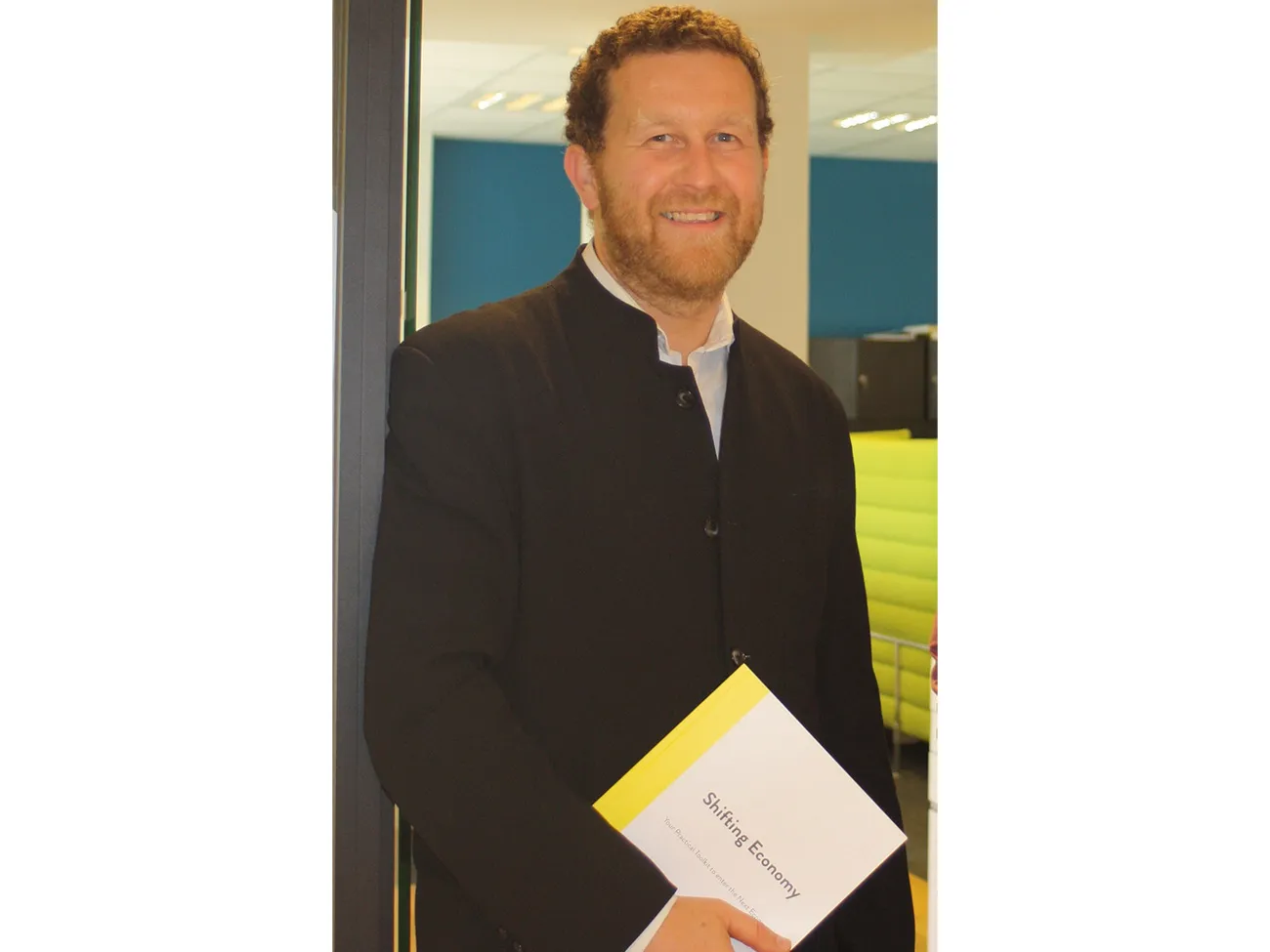
We hear from Emmanuel Mossay, circular economy expert and research & innovation director at EcoRes, and visiting professor at several universities
“I believe the Wallonia Circular plan is the first concrete, realistic and pragmatic plan. It reflects fairly well all the work carried out in parliament. It sets out very realistic ambitions, following on from the introductory report on the circular economy in Wallonia, which I co-authored with the parliamentarians. The report was adopted unanimously. I believe there is no point in going further at this stage. We first need to establish a stronger foundation, build a community of stakeholders and make it easier for them to connect. With this plan, Wallonia joins the Brussels-Capital Region and Flanders.
In fact, the main challenge of a circular economy is not material, but intangible. It is about opening people’s minds, connecting them and sharing data on flows. In this respect, much more remains to be done.
There is, of course, work to be done to raise awareness. Some Walloon companies are already practising the circular economy without even knowing it. I- Care, for example, named company of the year in 2020, specialises in predictive maintenance of industrial equipment. This extends the equipment’s lifespan. Other companies could make money by switching to a circular economy. Take the construction sector, for example: material prices are rising (wood, steel, etc.) and raw materials are becoming scarcer. I can see a shift towards a circular model, where local reuse of materials is more advantageous than waiting for deliveries from overseas supply chains and being dependent on them (rising prices, delays, etc.).
This also means adapting working methods and opening up to new sectors. Take thermal insulation, for example. You can use insulating materials and techniques that require adhesives, and therefore pollutants, or reuse existing panels from building deconstruction. Existing materials can be put to uses other than their original purpose, and can also be combined with other materials, drawing on resources available in your own sector or in other fields. We need to open up to connections between sectors and within sectors. For me, this is the main challenge of Circular Wallonia: building bridges and connections between stakeholders.
More specifically, one of the challenges of the circular economy is finding sufficient quantities of inputs (secondary, circular raw materials), with a relatively continuous flow, of an acceptable enough quality and stable enough to meet your production or processing needs. If supplies are interrupted too often, it is harder to establish a value chain.
The challenge is to map all flows effectively. Doing this centrally would be a mammoth task, but a decentralised, peer-to-peer approach could enable the creation of a data-sharing platform that can be built up over time, with sectors invited to connect to it. But what would a sector gain from doing so? Today, in most sectors and federations, incoming and outgoing flows are not known. A well-designed software platform that allows stakeholders to enter their data, with guarantees that the data will remain anonymous, would make it possible to identify waste resources and needs. This anonymisation is vital. A two-key system is needed: suppose company A has recoverable resources that interest company B. Company B sends a message and identifies itself to company A (the first key), then company A sends its response to company B (the second key). Both doors are now open, allowing them to reach an agreement, create more value and/or reduce costs, and in any case increase their environmental contribution.
E-commerce has clearly grown significantly. It is a good thing if it offers local products. Unfortunately, I think many of the products sold do not come from here. This does not support the local economy or employment. Packaging has also increased and is causing problems. But new solutions are available, such as reusable and recyclable packaging.
The pandemic has also changed people’s awareness. In a country that was once a textile pioneer, it is disheartening to see that we can no longer manufacture products such as face masks. And what about semiconductors? We are hugely dependent on China and Asia in general. Europe relocated production decades ago. This causes problems when, for example, containers of semiconductors are held up overseas. It leads to delays, waiting, higher prices and production stoppages. This recent trend highlights our dependence on raw materials, processed materials, finished products and technologies. It is also a fantastic opportunity to rethink our industry, define new standards and regulations, manufacture products using recycled inputs, develop reuse and prioritise local production. We have the know-how and the workforce; we need to build momentum. And that is the main ambition of Circular Wallonia.”
Question about this story? Ask your question
Keep following this
Get an email when a new story is published. No account needed.
- SubjectNews







