












Belgians collected more than 3,900 tonnes of used batteries in 2023
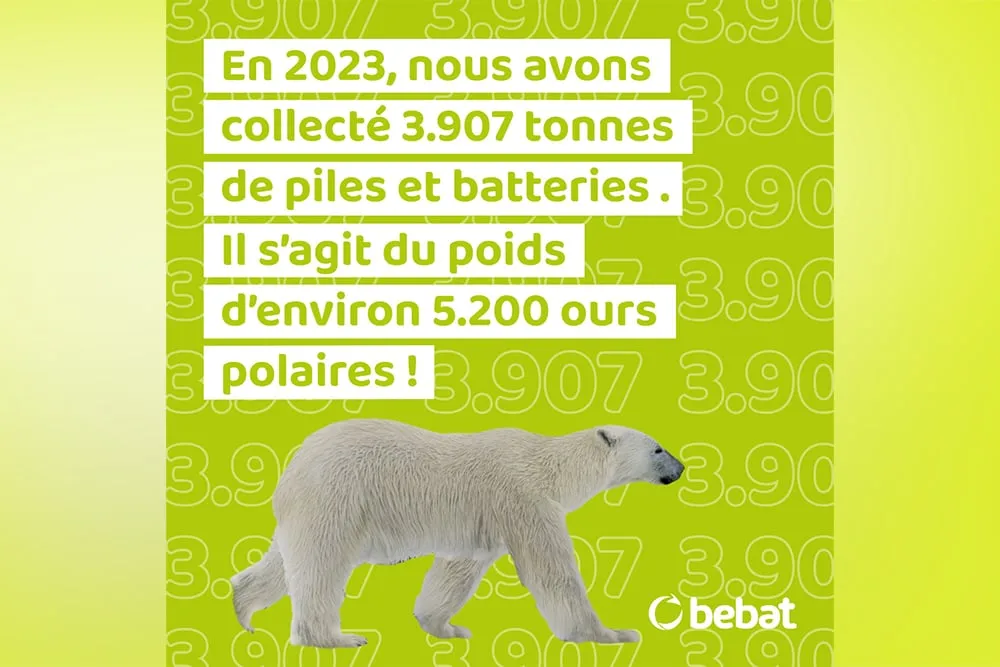
New collection record for Bebat
In 2023, Belgium set a new record by collecting 3,907 tonnes of used batteries, up 5% on the previous year. Once again, Belgians are among Europe’s leading performers, putting the country in pole position to meet the new EU battery regulations, which will set significantly more ambitious targets.
Collection results to be proud of
Through its campaigns, Bebat places strong emphasis on collecting all batteries, both those that are visible and those that are not. Thanks to the efforts of Belgians, collection points and affiliated companies, 3,907 tonnes of used batteries were collected this year. This represents a 5% increase in collections compared with 2022, while the number of batteries placed on the market rose by just 2%, showing that efforts to raise awareness of battery collection among Belgians are paying off.
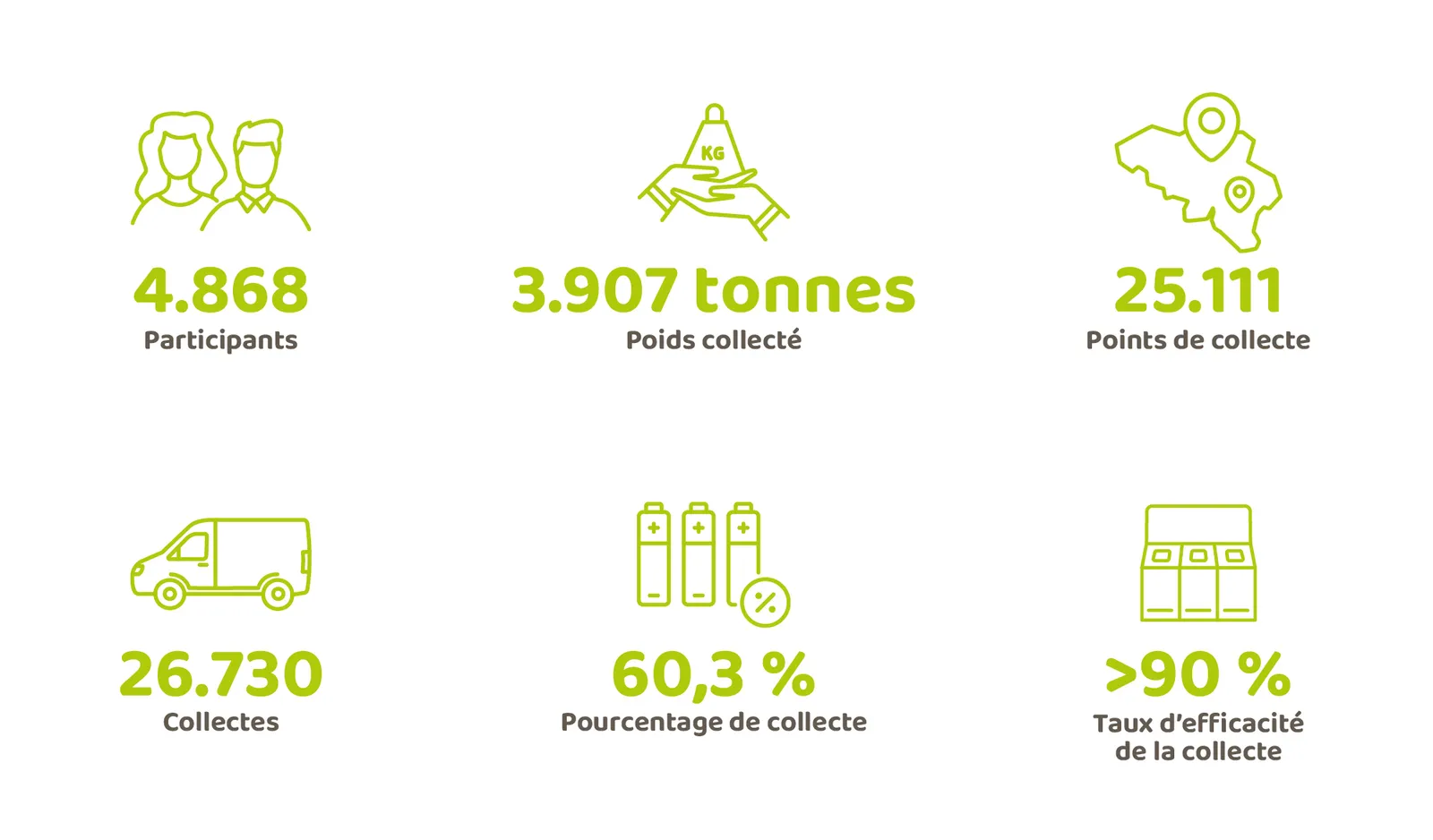
Bebat also achieves a collection efficiency of more than 90%, meaning that it collects over 90% of the used batteries that consumers want to dispose of. What is more, only one battery is found in every 100 kilograms of household waste, where it clearly does not belong. This figure confirms that Belgians are doing a good job of sorting their waste.
Raising awareness of the importance of every battery
Bebat’s campaigns, together with the many efforts made by stakeholders across the sector, have raised awareness of battery collection. This awareness is crucial because every battery counts. At the end of 2023, Belgium had no fewer than 25,111 active collection points where used batteries could be dropped off free of charge. These include thousands of hypermarkets and supermarkets, as well as many other shops, schools, businesses and recycling parks.
Awareness of the importance of battery collection is also growing among producers and sellers: in ten years, the number of companies in Belgium that sell batteries, or products containing them, through the Bebat system has tripled, reaching 4,868 participants today. This highlights how rapidly attitudes towards battery use and collection are changing.
Peter Coonen, CEO of Bebat, explains: “Thanks to our accessible battery collection system and, above all, the commitment of all Belgians, our members and participants, we once again achieved excellent results last year. In 2023, schools also played an important role by taking part in highly successful collection campaigns. We look to the future with confidence and are extremely proud of what we achieved in 2023 and of how far we have come together.”
Ready for future European challenges
With the new European legislation entering into force this year, Bebat faces new and ambitious targets. In 2023, Bebat collected 60.3% of the batteries placed on the market, already well above the current EU target of 45%. Thanks to its efficient collection system, Belgium is therefore the country closest to meeting the future targets. Bebat is confident it can achieve the EU target of 63% by 2027.
However, Bebat considers the EU target of 73% collection by 2030 unrealistic. The calculation method does not account for the longer service life of Li-ion batteries, which are now much more widely available on the market, or for the fact that these batteries are often built into devices that are exported or reused.
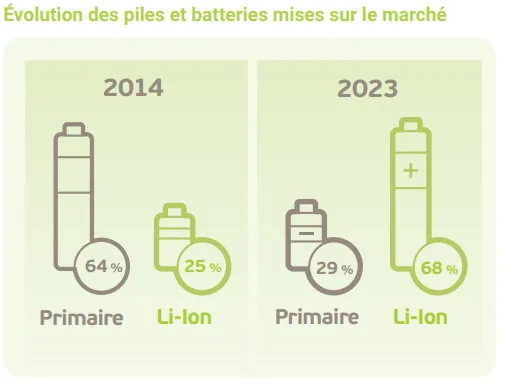
Yet these are precisely the batteries that are booming: over the past decade, portable Li-ion batteries, such as those used in cordless devices, mobile phones, laptops and power tools, have grown three times faster than traditional primary batteries. Add the market for electric bicycles, electric vehicles (EVs) and domestic batteries, and the Li-ion battery market is already more than three times the size of the market for traditional batteries.
Peter Coonen: “EU legislation bases its calculations on an average battery lifespan of 3 years. In reality, lithium-ion batteries last much longer. The new method for calculating the collection target is therefore not suited to the large capacity and technical characteristics of lithium-ion batteries. Nor does it take into account the fact that these batteries are often built into devices that are exported or reused. That is why Bebat, together with collection organisations in other countries, is calling for a calculation method based on the actual, much longer, lifespan of these batteries.”
In response to the challenges posed by the specific characteristics of Li-ion batteries, Belgium needs to adapt its collection model. Bebat is already stepping up its efforts and adapting its collection methods to keep pace with market developments. For the organisation, innovation is key to collecting every type of battery and giving them a second life. Bebat is determined to maintain its leading position in Europe.
Een zakelijke vraag aan Bebat asbl? Get in touch
Companies in this story
Keep following this
Get an email when a new story is published. No account needed.
- ThemeCollecting and transporting waste
- SubjectNews
- CompanyBebat asbl







