












AMP Robotics raises $91 million in Series C funding
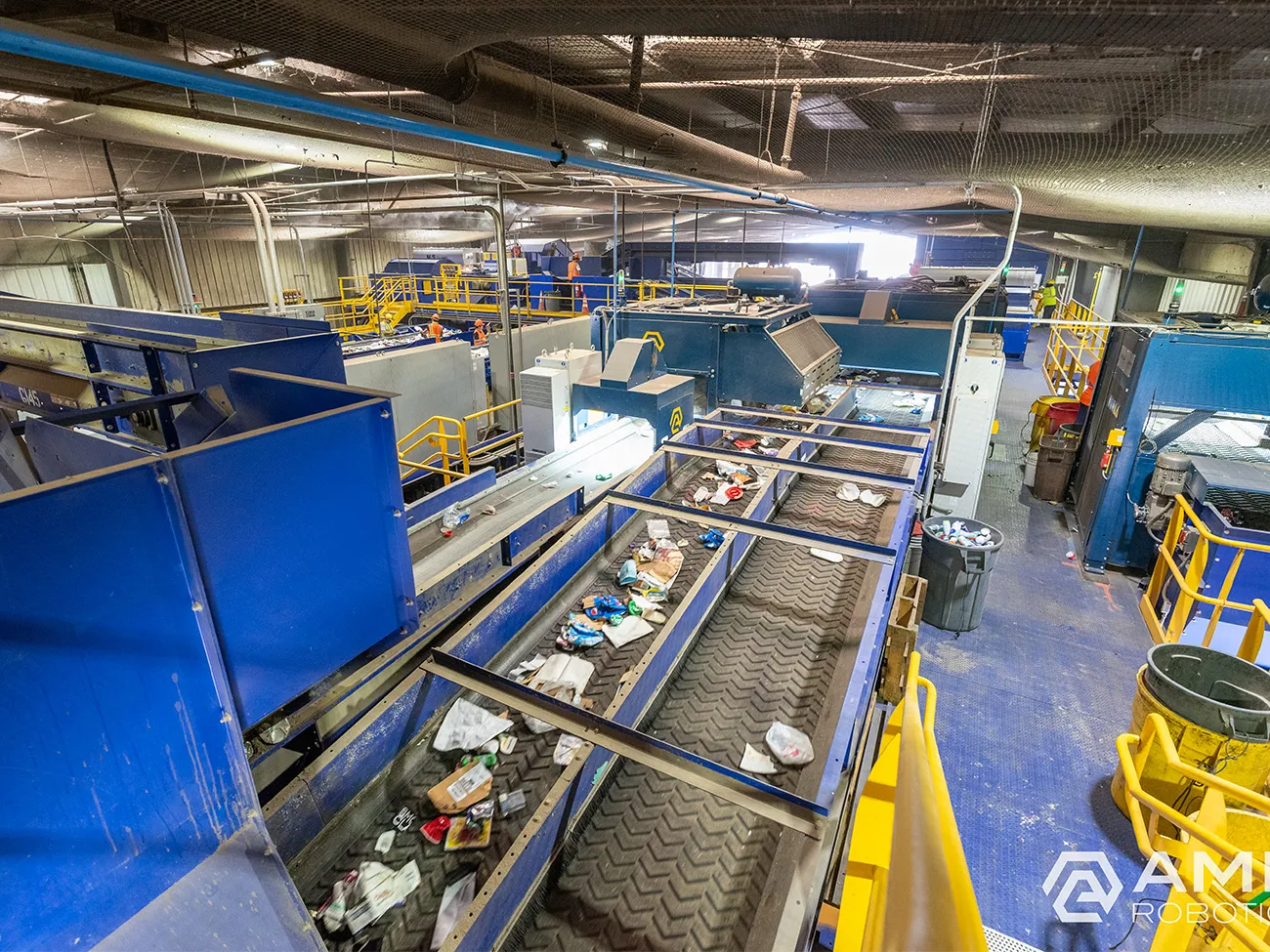
The new investment will support the modernisation and expansion of waste management infrastructure, with the aim of improving the economics and efficiency of recycling
AMP Robotics Corp. (“AMP”), a pioneer in artificial intelligence (AI), robotics and infrastructure for the waste and recycling sector, has raised $91 million in equity in a Series C funding round led by Congruent Ventures and Wellington Management, alongside new and existing investors including Blue Earth Capital, Sidewalk Infrastructure Partners (SIP), Tao Capital Partners, XN, Sequoia Capital, GV, Range Ventures and Valor Equity Partners. The latest funding round follows a $55 million Series B round led by XN in January 2021.
“Advances in robotics and automation are accelerating the transformation of traditional infrastructure, and AMP aims to redefine the waste and recycling sectors,” said Michael DeLucia, sector lead for climate investing at Wellington Management. “By bringing digital intelligence to the recycling sector, AMP can sort waste streams and recover more value than was previously possible.”
AMP will use the latest funding to grow its commercial operations while continuing its international expansion. Demand for robotics to modernise existing recycling infrastructure continues to rise; against a backdrop of record demand for recycled materials of all kinds, the industry needs capacity to meet the 2025 targets set by consumer packaged goods companies that have pledged to use post-consumer recycled content. The company’s core technology operations have expanded accordingly; the new capital will increase production capacity to support a fleet of around 275 robots worldwide and enable AMP to continue developing AI-based automation applications for recycling, such as AMP Vortex™, the company’s latest innovation for recovering film and flexible packaging. AMP also has three production facilities in the urban areas of Denver, Atlanta and Cleveland; the funding will further drive growth in the company’s secondary sorting business in the US.
“From the outset, we have focused on using AI-based automation to improve the economics and sustainability of our global recycling system,” said Matanya Horowitz, founder and CEO of AMP Robotics. “We have been fortunate to attract a passionate team, loyal customers and visionary investors along the way. With this new funding, we will accelerate our efforts to modernise and expand recycling infrastructure, helping society move towards a circular economy.”
According to the Institute of Scrap Recycling Industries, the recycling sector contributes nearly $117 billion to the US economy and processes 130 million metric tonnes of valuable goods every year. The global market for waste and recycling services is expected to grow significantly in the coming years, driven by growing consumer concerns about the environmental impacts of waste.
Of an estimated 44 million metric tonnes of plastic waste managed domestically in 2019, around 86% was landfilled, 9% was incinerated and 5% was recycled, according to a recent report on plastics by the US Department of Energy. Landfilled plastics represented significant losses for the country’s economy in 2019, with an average market value of $7.2 billion. Recovering plastic packaging and food-use plastics in the US alone could represent an annual pool of $2 billion to $4 billion in earnings before interest, taxes, depreciation and amortisation (EBITDA).
“AMP’s technology is reshaping recycling economics, bringing purpose and profitability together for our recycling partners,” said Abe Yokell, co-founder and managing partner of Congruent Ventures. “It is a privilege to support such a mission-driven team as the company has grown from eight people into an industry leader.”
“We are excited to help the AMP team develop cost-effective waste management solutions for the circular economy through technology, efficiency and automation,” added Kayode Akinola, head of private equity at Blue Earth Capital. “AMP is helping to reduce emissions and improve resource efficiency while meeting growing demand for recycled materials.”
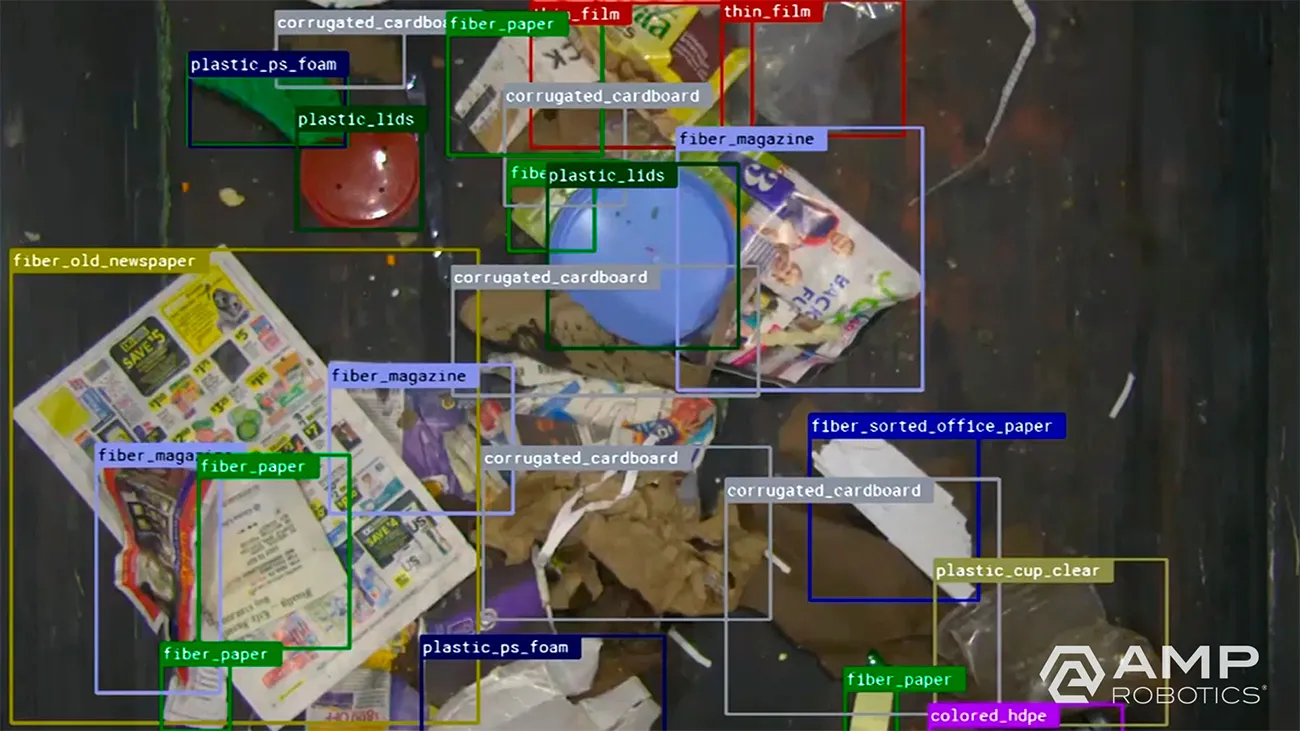
AMP’s proprietary technology uses computer vision and deep learning to identify and recover plastics, cardboard, paper, cans, cartons and many other types of containers and packaging recovered for processing into raw materials. AMP Neuron™, the company’s AI platform, has recognised more than 50 billion objects in real-world settings, making it the largest known dataset of recyclable materials for machine learning.
Data is seen as essential to improving recycling and recovery rates for a circular economy. In its National Recycling Strategy, published last year, the US Environmental Protection Agency identified standardising measurements and collecting more data as two of its five objectives. AMP continues to break new ground in the use of data for recycling with its material characterisation software, which accurately and consistently digitises the flow of recyclables in real time. Better data creates opportunities to identify gaps in material capture, provides transparency about which recyclables are being recycled and which are not, and establishes a basis for standardised measurement, which is vital to improving the national recycling system.
AMP’s AI capabilities also make secondary sorting technically and economically viable. Through its secondary sorting model, AMP recovers mixed paper, metals and a range of plastics with codes 1 to 7 across a variety of formats and characteristics, with high levels of accuracy and purity. Particular attention is paid to plastic mixes, which are only possible to sort with AI. The company sells these raw materials, including customised chemical and polymer blends required by processors and manufacturers, to buyers in end markets.
Brian Barlow, co-founder and co-CEO of SIP, added: “Given our unique focus on technology-driven infrastructure systems, we have supported AMP since its early seed investment and have seen the company develop AI into an essential component of the industry. We look forward to continuing to provide strategic guidance on how its technology can be deployed commercially in the physical environment, including at AMP’s secondary facilities.”
In 2022, AMP strengthened its leadership team by hiring key employees to lead engineering, finance and people operations. Josh Hollin joined the company as vice-president of engineering; most recently, he was vice-president of engineering and global product launch teams at Flex, a leader in technology innovation, supply chain and manufacturing solutions. Beth Dec joined the company as vice-president of people, having previously worked at Vail Resorts, where she was vice-president of HR shared services and talent acquisition. Regina Madigan brings more than 20 years of corporate finance experience across publicly listed, private and international companies to her role as vice-president of finance; most recently, she was vice-president of finance and controller at Paragon 28 during the company’s IPO.
In a move reflecting the industry’s strong adoption of AI and robotics technology, AMP recently expanded its partnership with Waste Connections, Inc. (TSX/NYSE: WCN), its largest customer. Since late 2020, Waste Connections has ordered or deployed 50 of AMP’s high-throughput robotic systems on plastics, fibre and residue lines, becoming the industry’s largest operator of AI-guided robotics.
Question about this story? Ask your question
Companies in this story
Keep following this
Get an email when a new story is published. No account needed.
- ThemeModernising recycling facilities
- SubjectNews
- CompanyAMP Robotics







