What can producers do to prevent lithium-ion fires in the recycling chain?
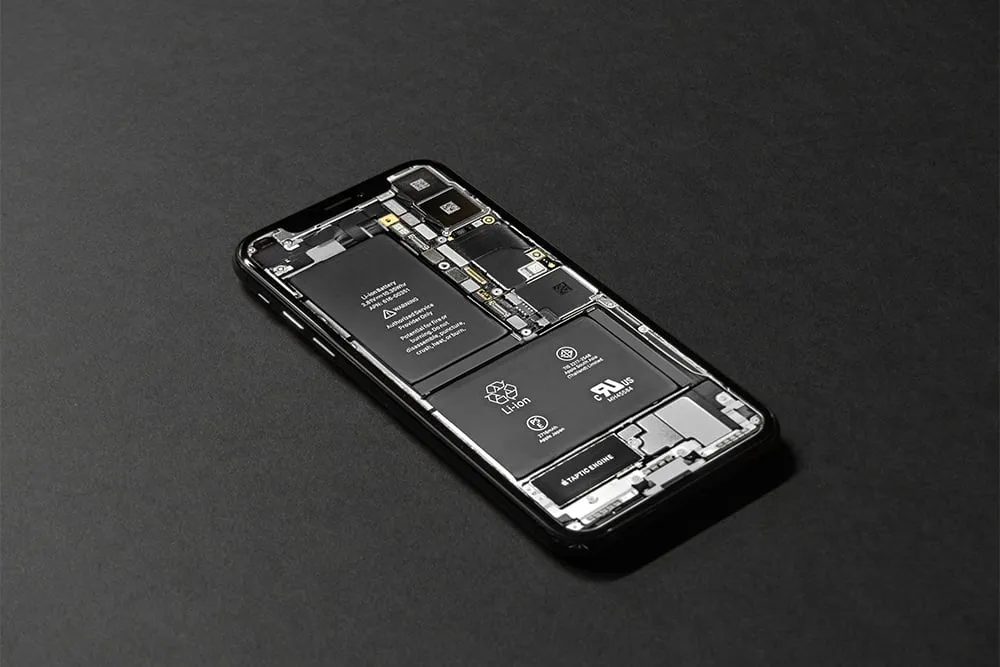
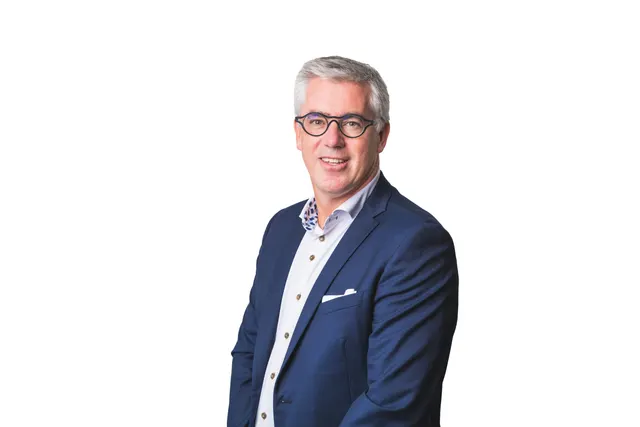
As explained in theory, new lithium-ion batteries that are intrinsically safer in terms of fire risk are currently being studied. Manufacturers are also explicitly being called on to take responsibility for the impact their products can have throughout the value chain and at end of life. But these new batteries are not just around the corner. So what solutions should be prioritised today to reduce the number of fires in our sector? Eric Dewaet of Recupel and Tess Pozzi of Federec shared their views.
1% of appliances still contain a battery
Today, 80% of electrical appliances sold contain a built-in battery. This means there is considerable potential to give these batteries and their raw materials a second life, provided they can be collected separately and effectively.
According to figures from Recupel, this is already largely the case today. Only 1% of appliances still contain a battery when they are collected. That said, manufacturers certainly need to step up their efforts to ensure batteries can be removed easily, either by consumers or by the treatment company.
New plant goes up in flames
Yet batteries still end up in other waste streams, where they can cause extensive damage. This is not just a problem in Belgium. Tess Pozzi of the French recycling federation Federec explains, for example, that an Observatory has been set up in France to better assess risks at industrial facilities.
In 2021, 83% of recorded incidents were caused by fires. A very recent incident completely destroyed a new packaging materials plant, costing €40 million. This is why prevention measures are now imposed according to the incoming waste streams. These measures are often disproportionate and fail to take the specific characteristics of each site into account.
Batteries are everywhere
The increase in fires is no surprise. Last year, there were more than in the previous decade. France is also seeing a growing focus on waste electrical and electronic equipment (WEEE), which contains more and more batteries. Even some sunglasses contain batteries. For the past two years, WEEE has therefore no longer been allowed to be transported loose. Specially designed containers should reduce the risk of fire. This has already been the case in Belgium for some time.
A fund to recover costs
But who should bear these costs? With so many incidents, it is becoming impossible to obtain fire insurance for recycling activities. Yet the problem does not lie with the waste and recycling sector itself. Should a fund not be set up to encourage innovation and finance damage repairs? The public identified manufacturers (65%) and public authorities (19%) as those who should bear the costs. Recupel, however, believes producers are already doing enough and points to the start of the chain. Proper separate collection reduces the risk of accidents.
Deposit schemes and eco-modulation as levers
Other stakeholders share this view. They therefore see the introduction of a deposit scheme as the main weapon in the fight against lithium-ion fires. Public authorities could also step up their efforts. A principle such as eco-modulation, whereby the environmental contributions paid by producers depend on ecological criteria such as how easily a battery can be removed, could provide leverage. In France, a bill to ban the sale of single-use e-vaping products is in the works. These products, too, often end up in the wrong waste stream.
Question about this story? Ask your question
Companies in this story
Keep following this
Get an email when a new story is published. No account needed.
- ThemePreventing recycling risks
- SubjectDenuo
- CompanyRecupel