The danger of lithium-ion batteries
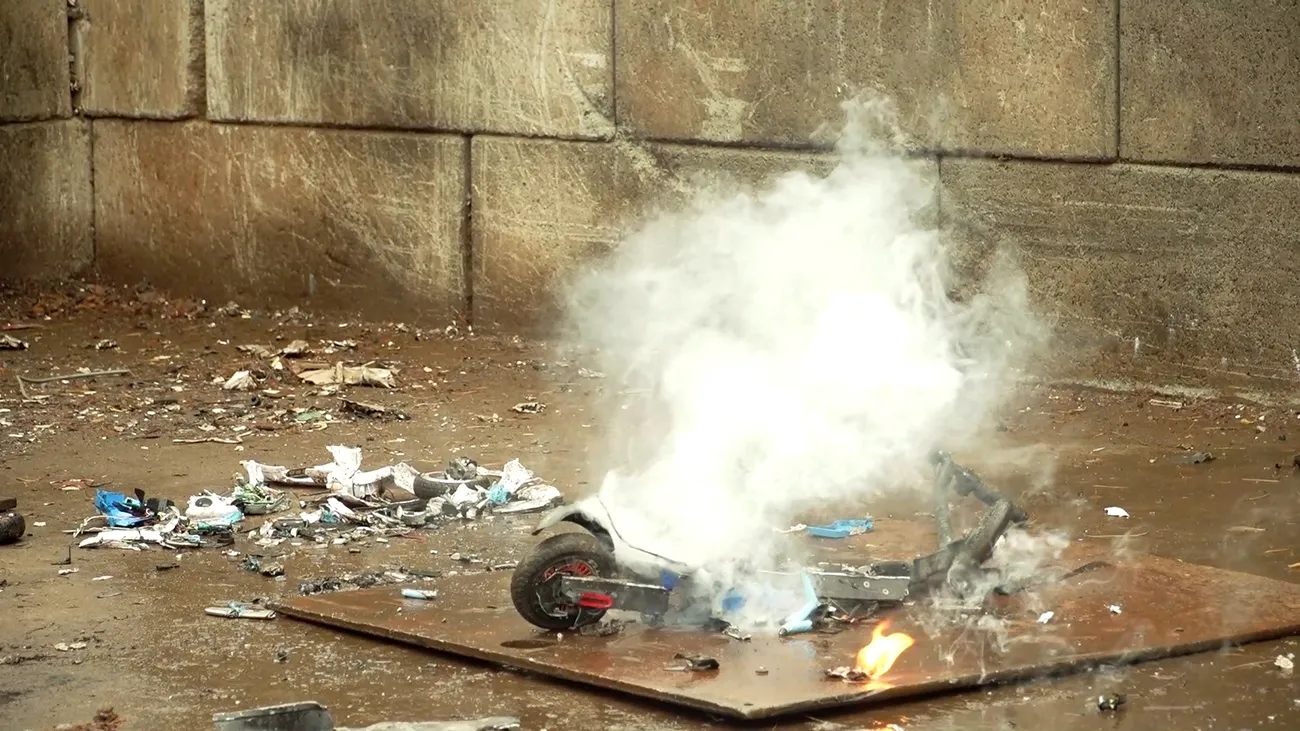
Lithium-ion batteries are becoming increasingly common. But manufacturers of electronic devices do not always make it easy for consumers to dispose of these batteries. As a result, many end up in recycling streams where they do not belong, with all the consequences this entails. Lithium-ion batteries have become the leading cause of fires at recycling companies. This is a problem that deserves our full attention, as the consequences and costs are borne solely by recyclers.
There are no precise figures for Belgium yet. But a 2020 study by the European industry federation EuRIC, involving its members active in the treatment of WEEE (waste electrical and electronic equipment), clearly shows that there is indeed a problem. Incidents occur almost every week. We are not talking only about fires or explosions: recycling companies have already invested heavily in safety systems that trigger a suppression system or enable intervention in other ways at the first sign of smoke or heat. More important even than the number of incidents is the potential damage they cause, starting, of course, with human suffering. Worker safety must come first. Then there are the costs: direct costs caused by flames, but also indirect costs resulting from production-line stoppages and the loss of equipment, whether due to fire or water. On average, these costs amount to 190 000 euros, and in the worst fire, the damage reached as much as 1.3 million euros. These figures explain why insurers think twice before working with recycling companies.
Start with sorting at source
Preventing incidents involving lithium-ion batteries starts with proper sorting at source. The number of products containing these batteries is constantly increasing. Over the next five years, it is expected to grow by 10% a year. A careless consumer throwing an e-cigarette into residual waste or disposing of an electric bike with its battery at a waste disposal site can have serious consequences, as their potential presence cannot be taken into account during processing. In fact, no detection system can reliably identify lithium-ion batteries in every waste stream and at every stage of the value chain. Finding a battery in a tonne of waste is like looking for a needle in a haystack. Incidents can now occur during collection or storage, as well as during processing.
For safe recycling, the battery must therefore be removed at source. This still happens far too rarely today, partly because of a lack of knowledge, and partly because good eco-design that takes recyclability, and therefore battery removal, into account from the outset is lacking. Raising awareness is therefore crucial.
We’re all in this together
But how can a recycling company protect itself against this risk? The general principles of fire safety certainly apply here. Invest in appropriate staff training so that employees can recognise lithium-ion batteries and their potential dangers, and correctly follow the procedures to be applied. Investment in technology is also required. While lithium-ion batteries may not be detectable, systems that sound the alarm at an early stage, as soon as heat or smoke appears, are available on the market. Compartmentalisation will also be crucial to prevent flames from spreading and thereby limit damage. These are mitigation measures, in other words. That is why it is important for lithium-ion batteries and fire safety to be on the political agenda too. Recycling companies may be footing the bill for the damage these batteries can cause, but they are not the cause of the problem. Pressure must be brought to bear to encourage manufacturers to embrace eco-design more widely.
Question about this story? Ask your question
Keep following this
Get an email when a new story is published. No account needed.
- ThemePreventing recycling risks
- SubjectDenuo