Seven policy proposals to reduce the number of lithium-ion fires
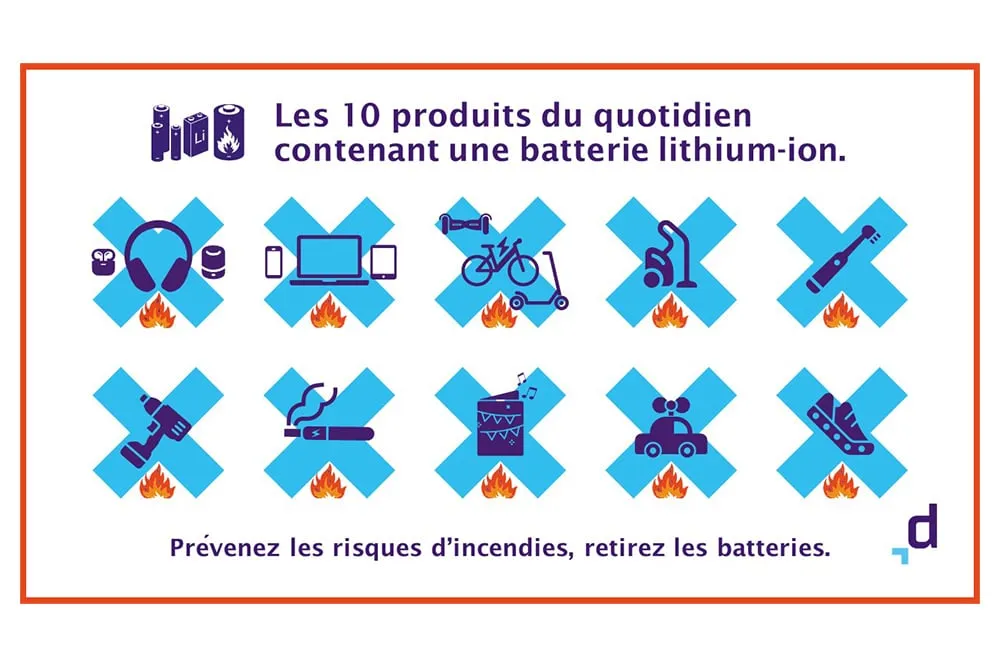
The recycling and waste management sector is sounding the alarm and calling for urgent action from policymakers and manufacturers to address this problem. Specifically, Denuo, as the sector federation, is calling for the following measures.
1. Ecodesign. 80% of lithium-ion batteries sold are integrated into a device and are therefore very difficult to dismantle. Policymakers must incorporate ecodesign principles into product regulations. They must require manufacturers to design their products so that batteries can be removed more easily. In line with the new European Batteries Regulation, products containing lithium-ion batteries should be clearly marked, for example using a colour code. In addition, policymakers are urged to ban unsustainable products that pose risks that are difficult to control, such as single-use e-cigarettes.
2. The creation of a fund by producer responsibility organisations, such as Bebat and Recupel, to provide financial support for research and the development of solutions. Manufacturers must pay an additional contribution to the fund for every lithium-ion battery they place on the market.
3. The creation of a disaster fund by insurance companies to support businesses affected by damage.
4. Awareness-raising and information. For batteries to be recycled correctly and safely, it is essential that consumers sort them correctly. This is why awareness-raising campaigns at federal and/or regional level are needed to inform the public about the correct sorting rules and the dangers of sorting these batteries incorrectly.
5. A deposit-return system for lithium-ion batteries rewards consumers who keep them separate. This financial incentive can encourage consumers to sort more batteries, and sort them better, thereby preventing further incidents in the recycling chain.
6. Additional collection channels. Given their potential hazard, separate door-to-door collection of lithium-ion batteries is one solution to consider. This is already the case in the United Kingdom, where a producer responsibility organisation is responsible for the separate collection of lithium-ion batteries only.
7. Developing statistics. Developing statistics can improve understanding of the scale of the lithium-ion battery problem. These statistics will serve as a decision-support tool for policymakers. Denuo is ready to work with fire services, insurance companies and producer responsibility organisations to obtain relevant figures and monitor the situation.
Question about this story? Ask your question
Companies in this story

Keep following this
Get an email when a new story is published. No account needed.
- ThemePreventing recycling risks
- SubjectDenuo
- Companybebat
- CompanyRecupel